Environment & ecology · Atlas of Telangana
Wildlife sanctuaries of Telangana
The nine notified sanctuaries
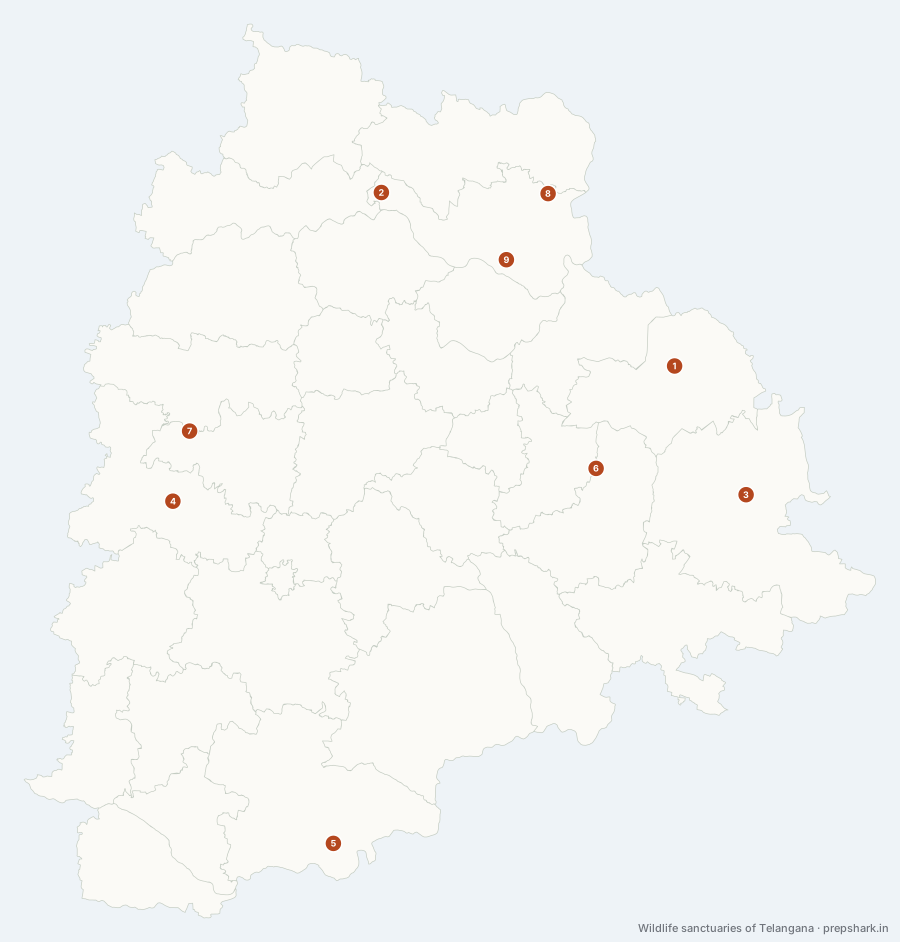
Numbered as on the map
The 9 on the map
1. Eturnagaram Wildlife Sanctuary
Mulugu
Known forThe state’s oldest sanctuary, and its largest left-bank forest.
The oldest sanctuary in the state — notified in 1953, before Andhra Pradesh existed — and the largest continuous forest block left on the Godavari’s left bank. The Dayyam Vagu runs through the middle of it. It is the wet end of Telangana’s forest range: everything here is moist deciduous where the north is dry teak.
SettingMoist deciduous forest · Dayyam Vagu · Godavari left bank · Chhattisgarh frontier
For the examNotified in 1953 by the Hyderabad State government, which makes it older than the state, the sanctuary system and the Wildlife Protection Act.
2. Kawal Wildlife Sanctuary
Mancherial
Known forThe 1965 notification under the tiger reserve.
The sanctuary notification of 1965 that the tiger reserve of 2012 was laid over. It is worth holding separately because the two boundaries are not the same: the reserve added a buffer around the sanctuary, and a question about "Kawal Wildlife Sanctuary" is about the smaller, older, differently governed area.
SettingSouthern dry deciduous teak · Godavari catchment · Kadem valley
3. Kinnerasani Wildlife Sanctuary
Bhadradri Kothagudem
Known forThe Kinnerasani reservoir, ringed by forest beside the coalfield.
The Kinnerasani is a Godavari tributary, and the sanctuary is the forest around the reservoir built across it to cool the Kothagudem power station. So a protected area, a coalfield and a thermal plant sit within a few kilometres of each other — which is the whole of the state’s energy-versus-forest argument in one place.
SettingMoist deciduous forest · Kinnerasani reservoir · Godavari tributary · Coal measures
4. Manjira Wildlife Sanctuary
Sangareddy
Known forCrocodile and waterbird islands in a reservoir that supplies Hyderabad.
Nine islands in the Manjira reservoir, protected for the mugger crocodile and for the water birds that use the reservoir on passage. It is also part of Hyderabad’s drinking water supply, so the sanctuary and the pumping station are the same water — an arrangement that works only because a reservoir is useful to both.
SettingManjira reservoir · Riverine islands · Mugger crocodile · Waterbird passage
For the examTelangana has no Ramsar site at all — one of a small handful of states with none — so the Manjira reservoir is the closest thing the state has to a wetland of international standing, and it holds no designation. A question asking for Telangana’s Ramsar site has no answer, which is the answer.
5. Nagarjunsagar–Srisailam Wildlife Sanctuary
Nagarkurnool
Known forIndia’s largest wildlife sanctuary, divided between two states in 2014.
The largest sanctuary in India, and it stopped being one state’s in 2014. Its northern share is Telangana’s, and Amrabad Tiger Reserve was drawn inside it; the southern share and the Srisailam dam itself are in Andhra Pradesh. Both governments still manage the same forest, which is why the sanctuary is worth knowing separately from the reserve laid over it.
SettingNallamala hills · Krishna gorge · Dry deciduous forest · Interstate sanctuary
For the examThe Srisailam dam is in Andhra Pradesh, not Telangana, although its reservoir backs up into Nagarkurnool. The sanctuary crosses the line; the dam does not.
6. Pakhal Wildlife Sanctuary
Warangal
Known forA thirteenth-century Kakatiya tank that grew a forest around it.
A sanctuary built around a man-made lake, which is the Telangana version of the thing: Pakhal was dug by the Kakatiyas in the thirteenth century, the forest grew up around it over seven hundred years, and the sanctuary was notified around both. Nothing here is wilderness in the sense a reader might expect — it is an engineered landscape that became habitat.
SettingSouthern dry deciduous forest · Kakatiya tank · Marsh and reed fringe
For the examPakhal is the clearest case of the argument this atlas keeps making about Telangana: the tanks are a thousand years old, and the ecology followed the engineering rather than the other way round.
7. Pocharam Wildlife Sanctuary
Medak
Known forA Nizam-era shooting reserve around the Pocharam lake.
Another reservoir sanctuary — the Pocharam lake was built across the Alair in the Nizam’s time and the forest was his shooting reserve. It holds one of the few remaining forest-fringe blackbuck and nilgai populations on the western plateau, in country that is otherwise entirely farmed.
SettingDry deciduous forest · Pocharam lake · Blackbuck and nilgai · Plateau farmland fringe
8. Pranahita Wildlife Sanctuary
Mancherial
Known forThe riverside forest strip along the Pranahita.
A narrow strip of forest along the Pranahita where it runs down the Maharashtra border to meet the Godavari. Its shape is its function: a riverside corridor rather than a block, protecting the crossing that links the Telangana forests to the Maharashtra ones.
SettingRiverine dry deciduous forest · Pranahita valley · Maharashtra frontier
9. Shivaram Wildlife Sanctuary
Mancherial
Known forMarsh crocodile habitat on the Godavari.
Protected for the marsh crocodile rather than for a forest. The sanctuary is a stretch of Godavari backwater and its islands, which is the habitat the mugger needs and which almost nothing else in the state still offers — the rest of the river is either impounded or worked.
SettingGodavari backwater · Riverine islands · Mugger crocodile habitat
For the examOne of two crocodile sanctuaries in the state; the other is Manjira, on the other side of the plateau and on the other river system.
Keep going