Start hereAbout 2 min
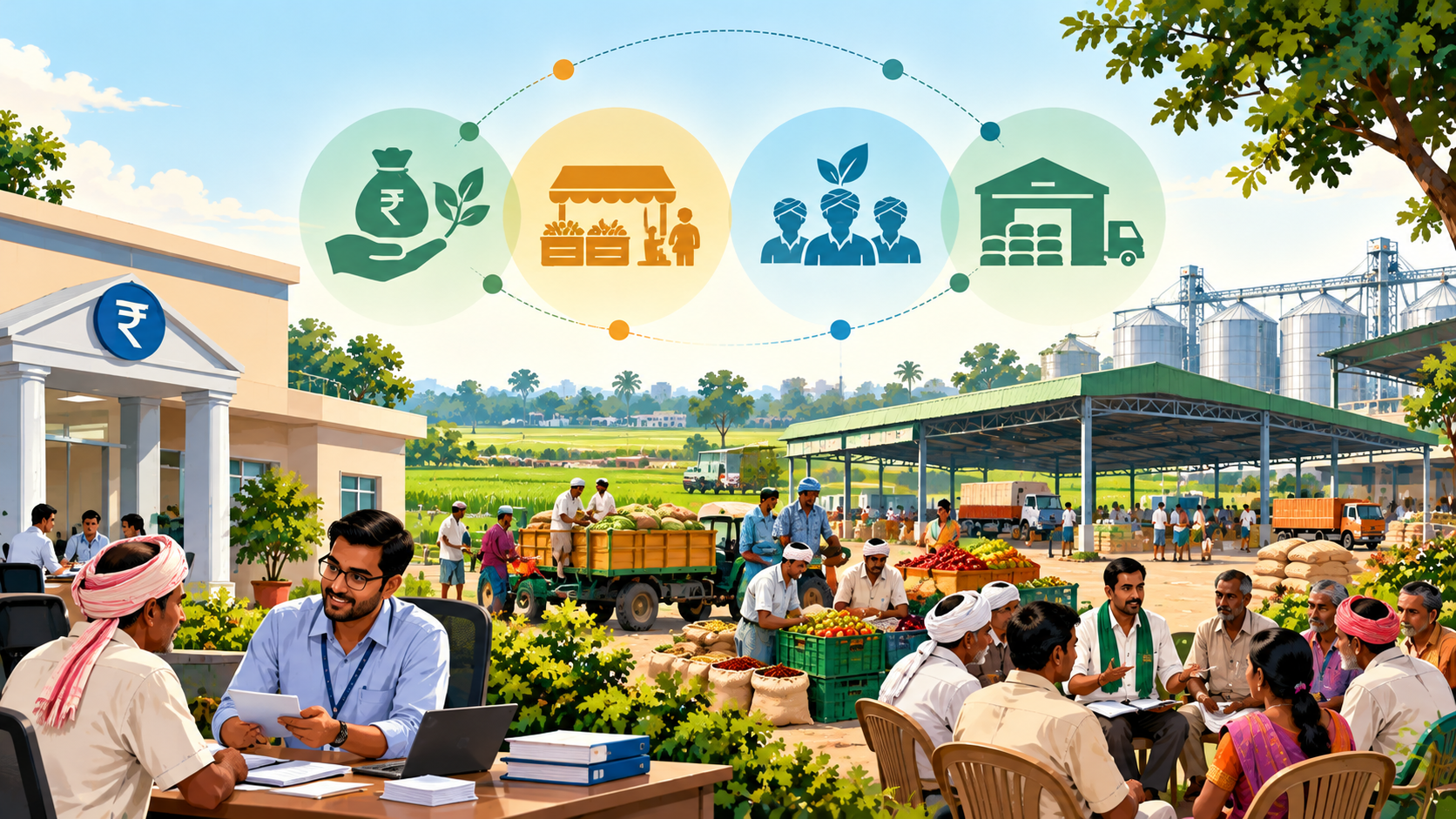
Chapter Overview Map
Farmer Institutions in Telangana
8.1–8.2 Agricultural credit
- Farm credit bridges the gap between spending on a crop and receiving income from its sale.
- Institutional lenders (banks and cooperatives) are regulated; non-institutional lenders (moneylenders, traders, relatives) are not.
- The Kisan Credit Card is the main route for short-term crop loans from banks.
8.3–8.4 Cooperative credit and indebtedness
- In Telangana, cooperative crop credit flows from the State apex bank through 9 District Central Cooperative Banks to Primary Agricultural Credit Societies (PACS).
- In 2019, 91.7% of Telangana's agricultural households were in debt, against 50.2% in India.
- A loan waiver cancels past debt; it does not provide new credit.
8.5 Extension and knowledge
- Extension carries research results, advice and market information to farmers.
- Telangana's field system rests on Agricultural Extension Officers and Rythu Vedikas, linked with the agricultural university.
8.6–8.8 Markets, procurement and storage
- Regulated markets run by Agricultural Market Committees work under a State market law.
- A Minimum Support Price (MSP) is an announced floor; procurement is actual buying at that price.
- The National Agriculture Market (e-NAM) links regulated markets online, but integration is not the same as trading.
- Storage lets farmers wait for better prices, and a registered warehouse receipt can be pledged for a loan.
8.9–8.10 Collective institutions and farm income
- Cooperatives and Farmer Producer Organisations (FPO) pool small farmers' produce and purchases.
- A Producer Company is one legal form an FPO may take.
- Finance, knowledge, markets and collective action together can make farm income higher and steadier.
Don't confuse
- Credit is borrowed money to repay; a subsidy or income support is not repaid.
- MSP announced does not mean every quintal produced is bought at MSP.
- An FPO is the organisation; a Producer Company is one legal form it can register under.
Notice how the branches follow the farmer's path: money first, then knowledge, then the market, then collective power.