Environment & ecology · Atlas of India
Coral reefs of India
Protected areas, habitats, and the corridors between them.
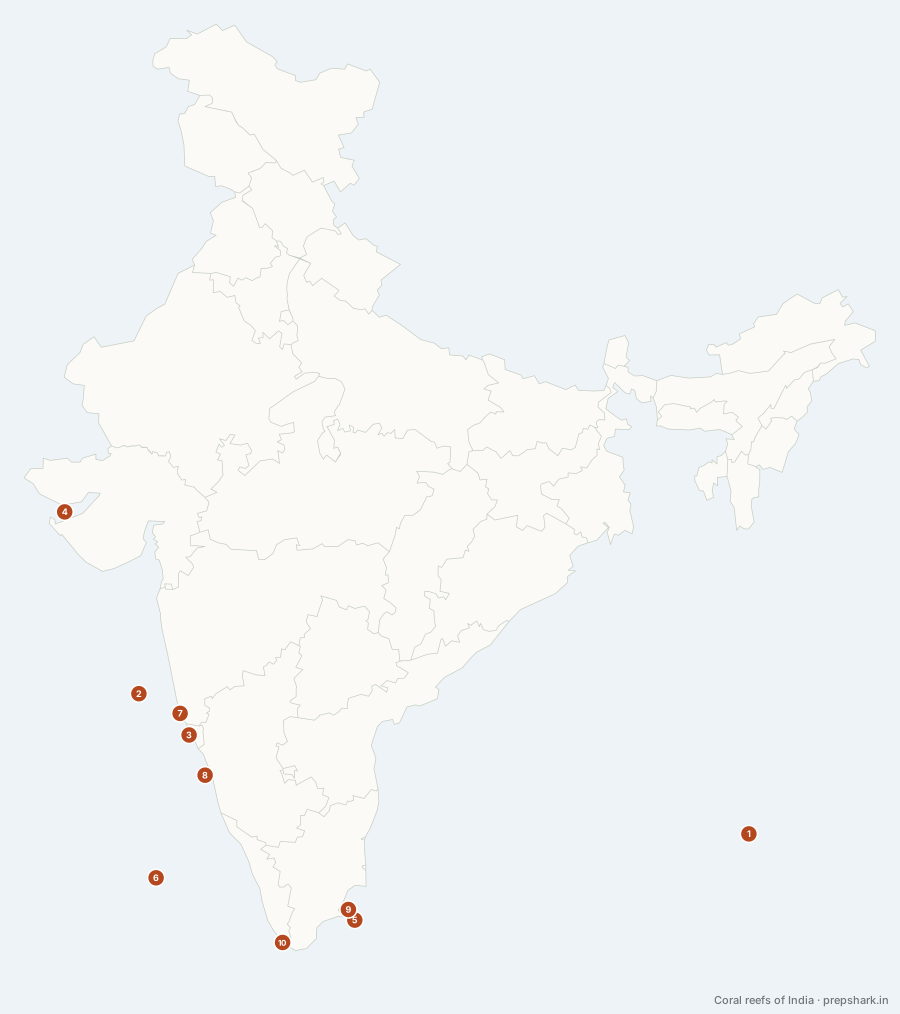
Numbered as on the map
The 10 on the map
1. Andaman and Nicobar reefs
Andaman and Nicobar Islands
Known forIndia’s richest reefs, and the 2004 tilt
The richest reefs in the country — more coral species than the other three areas together — fringing hundreds of islands along a submerged arc of the Arakan mountains. The 2004 earthquake tilted the whole chain, lifting reef out of the water in the north and drowning it in the south, which is a natural experiment nobody wanted.
SettingFringing reef · 500-plus coral species · island arc · post-2004 uplift and subsidence
2. Angria Bank
Maharashtra
Known forA drowned coral bank far offshore
A submerged plateau the size of a district lying about a hundred kilometres off Vijaydurg, its top twenty metres below the surface and covered in coral — the largest coral formation on the west coast, and one nobody knew the extent of until surveys in the 2010s. It is proposed as a marine protected area and is not one yet.
SettingSubmerged bank · deep patch coral · 20–40 m depth · proposed marine protected area
For the examNot one of the four reef areas, and the largest coral formation on the west coast all the same.
3. Grande Island reef
Goa
Known forGoa’s patch coral, off a working port
Patch coral around the island off Vasco, the best-known dive site on the west coast and the one most exposed to what a working port does to water clarity. Goa’s coral is a fringe on rock, like the rest of the Konkan’s.
SettingPatch coral on rocky island · turbid estuarine water · dive site
For the examWest-coast patch coral, not one of the four reef areas.
4. Gulf of Kachchh
Gujarat
Known forIndia’s northernmost reef, in the hardest water
The northernmost coral in India, on the fringing platforms around the islands of the gulf’s southern shore, growing in water that is turbid, hypersaline in summer and eleven degrees cooler in winter than any other Indian reef. It has the fewest species of the four for exactly those reasons, and the most industry on its shore.
SettingFringing reef on tidal platforms · high turbidity · extreme seasonal range · marine national park
For the examFewest coral species of the four areas — turbidity and temperature swing, not pollution alone, are why.
5. Gulf of Mannar
Tamil Nadu
Known forThe mainland’s best reef; dugong and seagrass
Fringing reef around twenty-one islands strung between Rameswaram and Tuticorin, the best-developed reef on the Indian mainland coast and the first marine biosphere reserve in South Asia. The reef, the seagrass behind it and India’s last dugongs are one system: the seagrass is what the dugong eats and the reef is what keeps the seagrass in place.
SettingFringing reef · 21 islands · seagrass meadow · dugong · biosphere reserve
For the examOne of the four reef areas, and the only one that is also a marine biosphere reserve.
6. Lakshadweep
Lakshadweep
Known forIndia’s only atolls
The only true atolls in India: coral rings grown on the rim of drowned volcanic seamounts on the Chagos–Laccadive ridge, each with a lagoon inside it. The islands exist only because the coral built them, which is why bleaching here is a question about land as much as about reefs.
SettingAtoll · lagoon and reef flat · Chagos–Laccadive ridge · Acropora-dominated
For the examAtoll is the answer for Lakshadweep and fringing for the other three areas — the standard one-line discrimination.
7. Malvan patch reef
Maharashtra
Known forIntertidal coral on the Konkan rock
Intertidal patch coral inside the Malvan marine sanctuary, on rock rather than on a reef platform — the kind of coral the west coast has, and the reason "India has four reef areas" is a statement about reef SYSTEMS rather than about where coral grows.
SettingPatch coral on rocky intertidal · marine sanctuary · turbid monsoon coast
For the examNot one of the four areas. Patchy west-coast coral is the qualifier that makes the "four" statement true.
8. Netrani Island reef
Karnataka
Known forKarnataka’s island patch reef
Coral around a small heart-shaped island twenty kilometres off Bhatkal, the richest patch reef on the Karnataka coast and, until recently, a naval gunnery target. The species list is closer to Lakshadweep’s than to the Konkan intertidal because the water here is clear and deep.
SettingPatch coral on an offshore island · clear deep water · whale shark records
For the examNot one of the four reef areas; the richest of the west-coast patches all the same.
9. Palk Bay reef
Tamil Nadu
Known forThe reef on the wrong side of the isthmus
A single fringing reef about twenty-five kilometres long off the Mandapam coast, on the other side of the isthmus from the Gulf of Mannar and usually reported inside its figures. Being a separate, shallower, more enclosed water is why its corals bleach first and recover slowest.
SettingFringing reef · shallow enclosed bay · bleaching-prone · seagrass
For the examCounted inside the Gulf of Mannar in most figures, so it is not a fifth of the four — a separate water carrying its own reef.
10. Vizhinjam patch reef
Kerala
Known forKerala’s only coral, beside a new port
Patch coral in the rocky bays at the southern end of the Kerala coast, the only coral the state has and now sitting beside a deep-water transhipment port. It is the southernmost of the west-coast patches and the least studied.
SettingPatch coral in rocky bays · southern Kerala coast · port development
For the examKerala has coral and is not one of the four reef areas — the southernmost west-coast patch.
Keep going