Environment & ecology · Atlas of India
Mangroves of India
Protected areas, habitats, and the corridors between them.
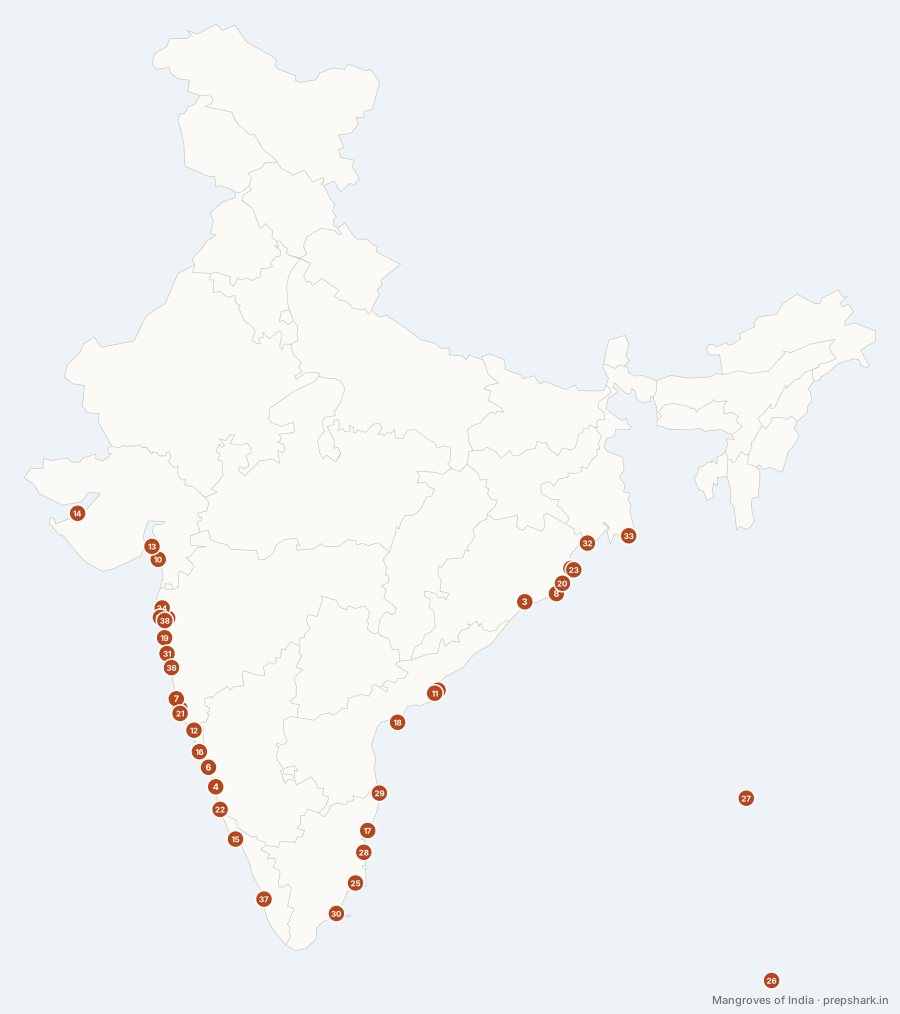
Numbered as on the map
The 38 on the map
1. Achra–Ratnagiri mangroves
Maharashtra
Known forThe first of the Konkan creek stands
Creek mangrove on the Sindhudurg coast, the first of the ten Konkan sites the Ministry lists. Maharashtra’s mangrove is a chain of creek stands rather than one forest, which is why the state has more identified sites than any other and less area than Odisha.
SettingCreek mangrove · Konkan coast · Avicennia and Sonneratia · fishing villages
2. Bhitarkanika
Odisha
Known forIndia’s second mangrove system; saltwater crocodiles
India’s second largest mangrove system, in the delta the Brahmani and the Baitarani build together, and the densest saltwater crocodile population in the country. Its species list is richer than the Sundarbans’ — the fresh water arriving from two rivers keeps a wider range of mangrove species alive.
SettingDeltaic mangrove · Brahmani–Baitarani · saltwater crocodile · high species diversity
3. Chilika mangroves
Odisha
Known forMangrove fringe on Asia’s largest brackish lagoon
The mangrove patches around Asia’s largest brackish lagoon, kept alive by the exchange through its sea mouth. They are small and scattered, and they are what a mangrove looks like on a lagoon shore rather than in a delta.
SettingLagoon-fringe mangrove · brackish · Nalabana · sea mouth exchange
4. Coondapur mangroves
Karnataka
Known forKarnataka’s largest mangrove estuary
Mangrove in the estuary where five rivers meet the sea at Kundapura, the largest single stand on the Karnataka coast. West-coast mangrove is estuarine rather than deltaic — the Ghats rivers are short and steep, so the forest is a ribbon along a tidal channel rather than a spread across a delta.
SettingEstuarine mangrove · five-river confluence · Ghats runoff · Udupi coast
5. Coringa
Andhra Pradesh
Known forThe Godavari delta’s mangrove sanctuary
The second largest mangrove stretch on the east coast after the Sundarbans, in the Godavari delta, and a wildlife sanctuary since 1978. Its fishing cat and its smooth-coated otter are the species the delta’s creeks support and the open coast does not.
SettingDelta mangrove · Godavari distributaries · fishing cat · estuarine crocodile
7. Devgad–Vijaydurg mangroves
Maharashtra
Known forCreek mangrove behind a Maratha sea fort
Mangrove in the Vaghotan creek behind the sea fort at Vijaydurg — one of the deepest creeks on the Konkan and the reason the fort was built where it was. The stand and the anchorage are the same piece of sheltered water.
SettingCreek mangrove · Vaghotan estuary · sheltered anchorage · Konkan
8. Devi mouth mangroves
Odisha
Known forMangrove beside an olive ridley nesting beach
Mangrove at the mouth of the Devi, the Mahanadi’s southern distributary, and one of the three mass-nesting beaches of the olive ridley turtle. The forest and the arribada share the same few kilometres of shore.
SettingDistributary mouth mangrove · sand spit · olive ridley rookery
9. Dhamra mangroves
Odisha
Known forA mangrove mouth beside a deep-water port
The mangrove at the Dhamra river mouth, on the northern edge of the Bhitarkanika system and beside the deep-water port built there. The port’s construction beside a turtle coast and a mangrove forest is the standard Indian case of a development-versus-habitat argument.
SettingRiver mouth mangrove · Bhitarkanika’s northern edge · port development
10. Dumas–Ubhrat mangroves
Gujarat
Known forThe Tapi mouth’s mangrove below Surat
The mangrove strip along the Tapi mouth below Surat, hemmed between the estuary and one of India’s densest industrial belts. What survives is the clearest case of a mangrove kept as a flood and cyclone buffer for a city rather than as habitat.
SettingEstuarine mangrove · Tapi mouth · industrial coast · flood buffer
11. East Godavari mangroves
Andhra Pradesh
Known forThe Godavari delta outside the sanctuary
The wider Godavari delta mangrove outside the Coringa sanctuary, threaded by the Gautami and Vasishta branches and by aquaculture ponds cut into it. The Ministry lists it separately from Coringa because it is managed separately.
SettingDelta mangrove · Gautami and Vasishta branches · aquaculture pressure
12. Goa mangroves
Goa
Known forCrocodile mangrove between two estuaries
The mangrove along the Cumbarjua canal and the tidal reaches of the Mandovi and the Zuari, carrying the estuarine crocodile at the northern end of its west-coast range. Barge traffic carrying ore down the same channels is the pressure the stands live with.
SettingTidal canal mangrove · Mandovi–Zuari · estuarine crocodile · barge traffic
13. Gulf of Khambhat mangroves
Gujarat
Known forMangrove on India’s highest tidal range
Patchy mangrove on the tidal flats of the Gulf of Khambhat, where the Narmada, the Tapi, the Mahi and the Sabarmati all empty and the tidal range is among the highest in India. Silt and a ten-metre tide together make this the hardest coast on the list to hold forest on.
SettingMacrotidal mudflat mangrove · Narmada–Tapi–Mahi mouths · high silt load
14. Gulf of Kutchh mangroves
Gujarat
Known forIndia’s second largest mangrove cover, almost all Avicennia
Gujarat holds more mangrove than any state but West Bengal, and most of it is here: Avicennia scrub on the tidal flats of the Gulf of Kachchh, growing in the hottest, saltiest conditions any Indian mangrove survives. It is low, single-species forest, and it is the reason the state’s cover figure is so large and its species list so short.
SettingArid-coast mangrove · tidal mudflat · Avicennia marina · Marine National Park
For the examGujarat is second to West Bengal by mangrove AREA while having far fewer species — the Gulf of Kachchh is why.
15. Kannur mangroves
Kerala
Known forKerala’s largest mangrove stands, mostly privately owned
Northern Kerala holds more mangrove than the rest of the state put together, in the estuaries of the short Ghats rivers that reach the sea here — Valapattanam, Kuppam, Kavvayi. Almost all of it is on private land, which is why its conservation is a tenure problem rather than a forestry one.
SettingEstuarine mangrove · short Ghats rivers · Kavvayi backwater · private land
16. Karwar mangroves
Karnataka
Known forThe Kali estuary’s mangrove
Mangrove in the Kali estuary at Karwar, at the northern end of the Karnataka coast, hemmed in by a naval base, a port and the river’s own dams upstream. Reduced freshwater release from those dams is what changes the salinity the stand grows in.
SettingEstuarine mangrove · Kali river · dam-controlled inflow · Uttara Kannada
17. Kazhuveli mangroves
Tamil Nadu
Known forMangrove on a brackish backwater
The mangrove of the Kazhuveli backwater, a brackish sheet linked to the Bay of Bengal by the Uppukalli creek north of Puducherry. Its salinity swings with the tide and the monsoon, and the mangrove sits where the swing is widest.
SettingBackwater mangrove · tidal creek · fluctuating salinity · Villupuram coast
18. Krishna mangroves
Andhra Pradesh
Known forThe Krishna delta’s mangrove sanctuary
The mangrove of the Krishna delta, protected as the Krishna wildlife sanctuary, and the southern half of the pair of Andhra deltas that carry the state’s mangrove. Reduced river flow reaching the delta is the pressure here, where in the Godavari it is aquaculture.
SettingDelta mangrove · Krishna distributaries · reduced freshwater inflow
19. Kundalika–Revdanda mangroves
Maharashtra
Known forThe Kundalika’s mouth, south of Mumbai
Mangrove at the mouth of the Kundalika at Revdanda, on the Raigad coast an hour south of Mumbai. Close enough to the metropolis for its creeks to be under building pressure and far enough for the stands to still be continuous.
SettingEstuarine mangrove · Kundalika mouth · Raigad coast · building pressure
20. Mahanadi mangroves
Odisha
Known forThe delta fringe beside a working port
The mangrove fringe of the Mahanadi delta, squeezed between the port at Paradip and the paddy behind it. What survives here is the clearest Indian case of a mangrove belt cut down to the width a shipping channel and an industrial coast leave it.
SettingDelta mangrove · Mahanadi distributaries · port and industry pressure
21. Malvan mangroves
Maharashtra
Known forMangrove behind Maharashtra’s marine sanctuary
Mangrove behind the Malvan marine sanctuary at the southern end of the Konkan, where the state’s only coral patches lie offshore. Mangrove landward and coral seaward on the same coast is what makes this site do double duty.
SettingCreek mangrove · Malvan marine sanctuary · rocky shore · coral patches offshore
22. Mangalore Forest Division mangroves
Karnataka
Known forEstuarine mangrove inside a port city
The mangrove of the Netravati and Gurupura estuaries around Mangaluru, listed by forest division rather than by place because that is the unit that manages it. Port and city between them are what the stands have left to grow in.
SettingEstuarine mangrove · Netravati–Gurupura confluence · urban and port pressure
23. Mangrove Genetic Resources Centre
Odisha
Known forA living gene bank for mangrove species
A gene bank rather than a forest: the centre holds living collections of India’s mangrove species inside Bhitarkanika, which is the one place with enough of them to bank. It is listed as a site in its own right because the scheme funds it as one.
SettingEx-situ collection · inside Bhitarkanika · mangrove genetic diversity
24. Mumbra–Diva mangroves
Maharashtra
Known forThe stand that produced India’s mangrove protection orders
Mangrove on the Thane creek’s upper reach, at the point where the creek narrows towards the Ulhas. It is the most heavily encroached stand on this list — landfill, building and a railway line on the same few kilometres — and the litigation over it produced Maharashtra’s mangrove protection orders.
SettingUpper creek mangrove · Thane creek · landfill and encroachment
25. Muthupet
Tamil Nadu
Known forThe Kaveri delta’s mangrove lagoon
The mangrove at the southern end of the Kaveri delta, where the river’s last distributaries reach the Palk Strait through a lagoon. Little fresh water gets this far down the delta, so the stand is salt-stressed and dominated by Avicennia.
SettingLagoon mangrove · Kaveri distributaries · Avicennia-dominated · hypersaline
26. Nicobar mangroves
Andaman and Nicobar Islands
Known forMangrove drowned by the 2004 subsidence
The mangroves of the Nicobar group, at the southern end of the archipelago and the sharpest illustration of what the 2004 tsunami did: Great Nicobar subsided, and mangrove that had stood above the tide was drowned outright.
SettingIsland mangrove · tectonic subsidence · Great Nicobar · Sundaland flora
27. North Andaman mangroves
Andaman and Nicobar Islands
Known forThe densest mangrove creeks in the islands
The tidal creeks of North Andaman carry some of the densest mangrove in India, in an archipelago that holds nearly a fifth of the country’s mangrove cover on a fraction of its coastline. The 2004 earthquake tilted these islands, drowning mangrove in the south and lifting it clear of the tide in the north.
SettingIsland tidal creek mangrove · high species richness · 2004 tectonic tilt
28. Pichavaram
Tamil Nadu
Known forThe tsunami buffer between two estuaries
Mangrove standing in water between the Vellar and Coleroon estuaries, dense enough to be paddled through, and the stand credited with taking the 2004 tsunami off the villages behind it. It is the best-studied mangrove in southern India for exactly that reason.
SettingEstuarine mangrove · Vellar–Coleroon · littoral swamp forest
29. Pulicat mangroves
Tamil Nadu
Known forMangrove on India’s second largest lagoon
Mangrove fringing India’s second largest brackish lagoon, which straddles the Tamil Nadu–Andhra border with most of its water on the Andhra side. The barrier island and the lagoon behind it are what the mangrove grows on the inside of.
SettingLagoon-fringe mangrove · barrier island · brackish · flamingo
30. Ramnad mangroves
Tamil Nadu
Known forDry-coast mangrove on the Palk Bay
The mangrove patches along the Ramanathapuram coast, on the Palk Bay shore behind the Gulf of Mannar islands. They are small, dry-coast stands rather than delta forest — the difference between a mangrove fed by a river and one fed only by the tide.
SettingTidal mangrove patches · no riverine inflow · Palk Bay · seagrass beside
31. Shrivardhan mangroves
Maharashtra
Known forTide-fed creek mangrove on the Raigad coast
Creek mangrove on the Raigad coast south of Harihareshwar, in a stretch of shoreline with no large river behind it. The stands here are tide-fed, which makes them smaller and saltier than the estuarine forests to the north.
SettingTidal creek mangrove · no major river inflow · Raigad · Konkan
32. Subarnarekha mangroves
Odisha
Known forThe northernmost of Odisha’s mangrove areas
The mangroves at the mouth of the Subarnarekha, at the northern end of the Odisha coast where it meets West Bengal. It is the link in the chain between the Sundarbans and Bhitarkanika, and the smallest of Odisha’s seven identified areas.
SettingEstuarine mangrove · Subarnarekha mouth · casuarina and dune behind
33. Sundarbans
West Bengal
Known forThe largest mangrove forest in the world
The largest mangrove forest on earth, built where the Ganga and the Brahmaputra meet the tide, and the only one anywhere with a resident tiger population. India holds about two-fifths of it and Bangladesh the rest, which is why almost every fact about it comes in two versions.
SettingDeltaic mangrove · tidal creeks · Sundari trees · Royal Bengal tiger
For the examSundari (Heritiera fomes) gives the forest its name, and the tiger makes it the only mangrove system with a big-cat population.
34. Vaitarna mangroves
Maharashtra
Known forThe estuary mangrove north of Vasai
Mangrove in the Vaitarna estuary north of Vasai, where the river reaches the sea past Palghar’s salt pans and fishing villages. It is the northernmost of the Mumbai-region creeks and the least built-over.
SettingEstuarine mangrove · Vaitarna mouth · salt pans · Palghar coast
35. Vasai–Manori mangroves
Maharashtra
Known forThe creeks that bound Mumbai to the north
The creek mangrove that separates Mumbai’s island from the mainland at Vasai and Manori, and the reason the north of the city floods less than the east. Reclamation of these creeks is the standard Mumbai case study.
SettingCreek mangrove · Vasai and Manori creeks · reclamation pressure
36. Veldur mangroves
Maharashtra
Known forThe Vashishti estuary’s mangrove at Dabhol
Mangrove in the Vashishti estuary at Dabhol, beside the power project that made the creek famous. It is the Ratnagiri district’s largest stand and the one most often quoted in Maharashtra’s industrial-coast arguments.
SettingEstuarine mangrove · Vashishti creek · industrial coast · Ratnagiri
37. Vembanad mangroves
Kerala
Known forFringing mangrove on the west coast’s largest backwater
The mangrove fringe of the Vembanad backwater, most of it in patches around Kochi and along the Kuttanad edge. Kerala’s mangrove is fragmented rather than continuous — a fringe along a working backwater, cut through by paddy, ports and settlement.
SettingBackwater fringe mangrove · brackish · Kochi estuary · fragmented
38. Vikhroli mangroves
Maharashtra
Known forPrivately conserved mangrove inside Mumbai
The mangrove on the Mumbai bank of Thane creek at Vikhroli, held in private hands and conserved by the company that owns it — the unusual case on this list of a mangrove kept intact inside a metropolis by a landowner rather than by a department.
SettingCreek mangrove · Thane creek · private conservation · flamingo roost
Keep going