

Start hereAbout 1 min
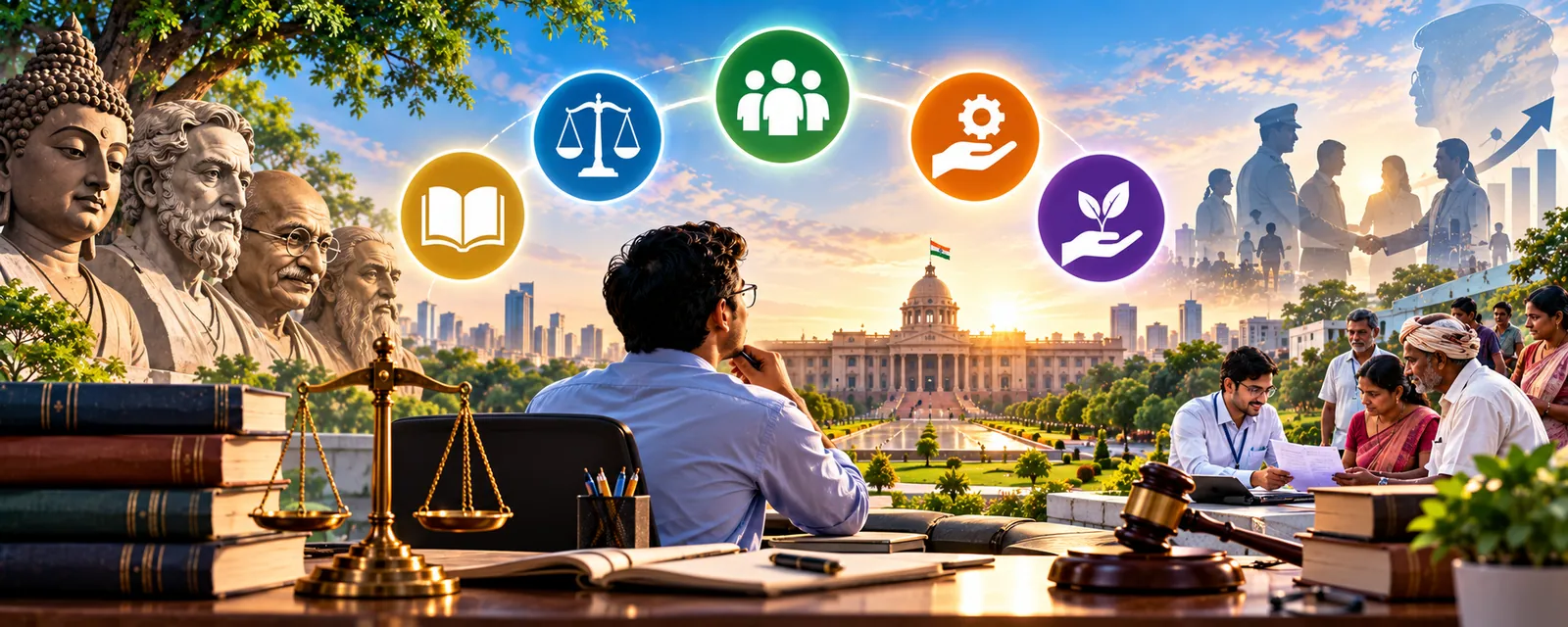
Chapter Overview Map
Public service ethics
4.1 Public service
- Public purpose and public trust
- Public interest and public good
- Service, not power or privilege
4.2–4.4 Foundations
- Social contract, utility, duty, rights, justice
- Indian thought: dharma, Kautilya, Ashoka, Gandhi, Ambedkar
- Constitutional morality and constitutional values
4.5–4.7 Professional ethics
- Competence, integrity, impartiality
- Twenty-one values of public service
- Duties, conflicts of interest, discretion
4.8 Right understanding
- UHV: understanding before facilities
- Self, relationships, society, nature, existence
- Guides discretion and expertise
4.9–4.10 Holistic technology
- Real needs, inclusion, dignity, sustainability
- Appropriate technology and responsible innovation
- Privacy, AI, digital divide, redress
4.11–4.14 Governance in practice
- Holistic and ethical governance
- Dilemma resolution framework
- Andhra Pradesh applications
Notice: The six branches follow the chapter's order; each branch title gives the sections where it is taught.
1Human dignity
2Public purpose
3Legitimate authority
4Ethical duty
5Professional values
6Right understanding
7Holistic governance
8Responsible technology
9Public welfare
Read left to right: the chapter moves from why public power exists to how it should be used, ending with public welfare as the test of everything before it.