

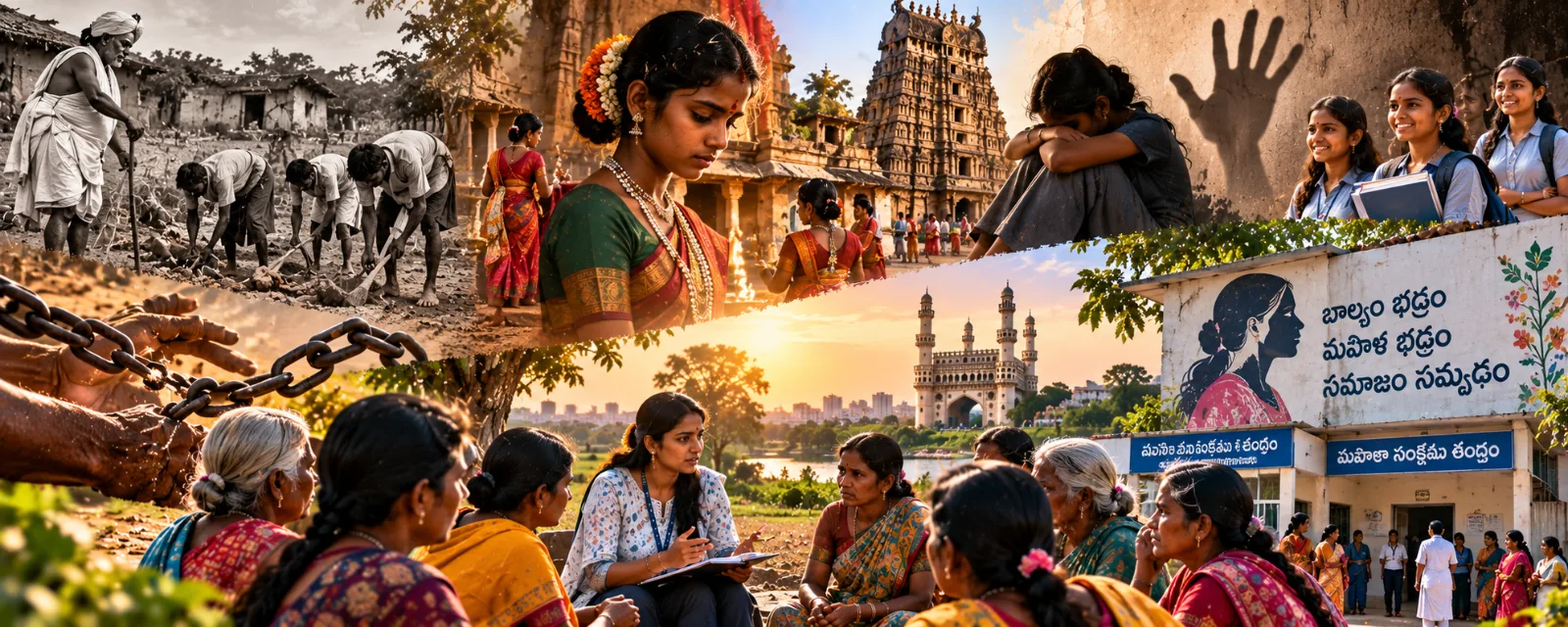
Start hereAbout 1 min
Chapter Overview Map
Telangana Social Issues I
13.1 Context
- Hyderabad State's jagir, diwani and sarf-e-khas tenures concentrated land and power in a few hands.
- Caste, class and gender together decided who bore the heaviest burdens.
13.2–13.4 Vetti
- Vetti was forced, unpaid service and goods extracted by landlords and officials.
- The Andhra Mahasabha, the armed struggle (1946–1951), jagir abolition (1949), tenancy law (1950) and Article 23 ended it in stages.
13.5–13.8 Jogini–Devadasi
- Jogini dedication gave mostly Dalit girls to a village goddess, denying them marriage and choice.
- The 1988 Act, adapted for Telangana in 2016, makes dedication void and punishable; rehabilitation restores livelihoods and dignity.
13.9 Girl child
- Son preference shows in a child sex ratio of 932 (Census 2011) and unequal investment in daughters.
- Girls' education has expanded fast, and women now outnumber men in higher education enrolment.
13.10–13.11 Child marriage
- A marriage of a girl below 18 or a boy below 21 is a child marriage under the 2006 Act.
- Telangana's rate fell from 26.2% (NFHS-4) to 17.9% (NFHS-6) of women aged 20–24.
13.12 Integrated analysis
- The issues share structural roots but differ in mechanism, law and remedy.
- Lasting change needs institutions, opportunities and community change, not law alone.
Don't confuse
- Vetti (custom and caste) differs from Bhagela (debt bondage of one servant).
- Sex ratio, child sex ratio and sex ratio at birth measure different things.
Branches follow the order of the sections; the last branch flags two cross-section confusions.