

Start hereAbout 1 min
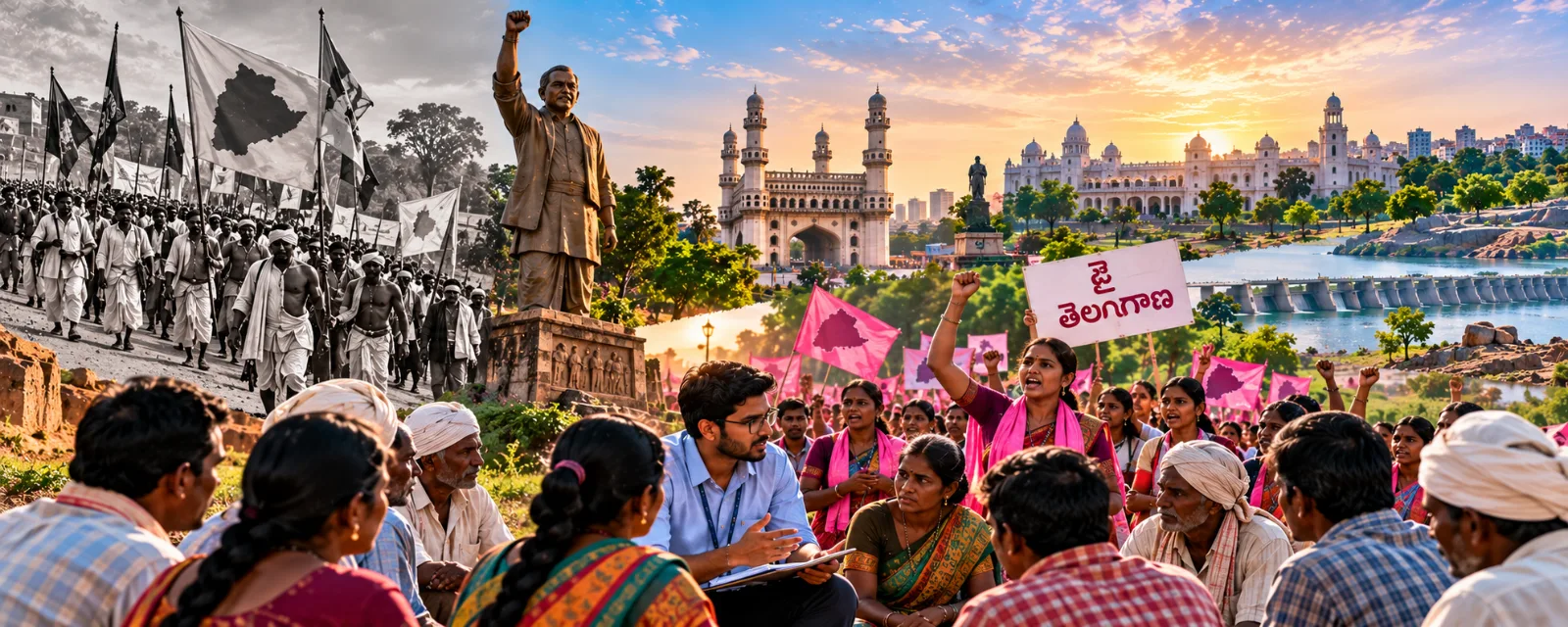
Chapter Overview Map
Social Movements in Telangana
15.1–15.2 Concepts and theories
- A movement is sustained, organised collective action for or against change.
- Theories explain why (deprivation), how (resources, identity) and when (opportunity).
15.3–15.6 Reform and social justice
- Libraries and the Adi-Hindu movement began the awakening.
- Madiga Dandora and BC movements seek a fair share of reservations.
15.7 Tribal movements
- From Komaram Bheem to Indravelli and podu claims under the Forest Rights Act.
- Land, forests and recognition remain the core issues.
15.8–15.10 Cultural, agrarian and labour
- Andhra Mahasabha moved from culture to the Peasant Armed Struggle (1946–51).
- Singareni miners and weavers organised for wages and dignity.
15.11–15.15 Women, youth, region, rights
- Women fought Jogini dedication and liquor; students led 1969 and 2009–14.
- Statehood, civil liberties and environment drew new alliances.
Don't confuse
- A demand is not an achievement, and a law is not its implementation.
- Hyderabad State, undivided Andhra Pradesh and Telangana State are different contexts.
Notice how the branches move from concepts to particular movements, and how the warning branch applies to every section.