

Start hereAbout 1 min
Chapter Overview Map
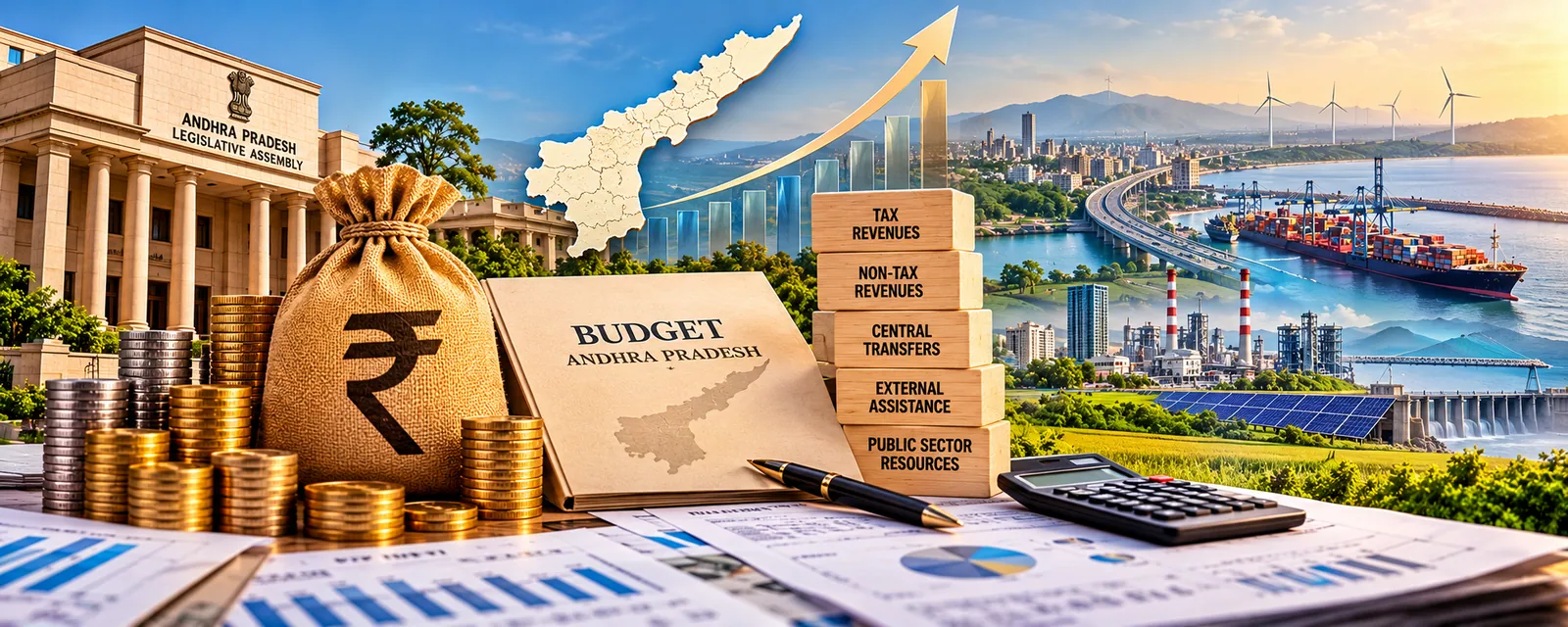
Resource Mobilisation in Andhra Pradesh
4.1–4.3 Budget and fiscal space
- The State raises own taxes, receives Union transfers and borrows to finance spending.
- Committed expenditure, deficits and debt limit how much is left for capital investment.
4.4–4.6 Bifurcation and Union support
- The Andhra Pradesh (AP) Reorganisation Act, 2014 divided assets, liabilities and institutions and promised development support.
- Revenue-gap grants, capital-city aid, Polavaram and backward-area grants are partly delivered and partly disputed.
4.7–4.8 Borrowed resources
- Public debt finances deficits; guarantees and off-budget borrowings add hidden pressure.
- Externally aided projects bring long-term foreign loans routed through the Union, repaid by the State.
4.9–4.11 Physical resources
- Andhra Pradesh holds about 92% of India's barytes resources and is a leading producer of limestone and granite.
- Forests cover about 18% of the State's area and support tribal livelihoods and ecosystem services.
4.12–4.13 Water and strategy
- Krishna and Godavari waters are shared under tribunal awards and the 2014 Act's river boards.
- Disputes with Telangana, Odisha and Karnataka affect irrigation, power and project timelines.
- Sustainable mobilisation links own revenue, productive borrowing and conserved natural resources.
Don't confuse
- Special Category Status was never granted; the Special Assistance Measure is a different, Union-designed package.
- An externally aided project is a government loan; foreign direct investment is private equity in firms.
Notice how the branches move from money (budget, transfers, debt) to nature (minerals, forests, water), and how the warning branch separates two pairs that students often mix up.