

Start hereAbout 1 min
Chapter Overview Map
Transport, Communication and Digital Infrastructure in India
12.1 Foundations
- Infrastructure is the stock of basic facilities, such as roads, networks and platforms, whose services every other activity uses.
- It works through lower transaction costs, wider markets and higher productivity, not through the assets alone.
12.2–12.6 Transport modes
- Roads carry most passengers and freight; railways move bulk freight cheaply over long distances.
- Ports, inland waterways and airports link India to world trade and to remote regions.
12.7 Logistics and integrated planning
- Multimodal logistics joins the modes so goods change mode with little delay or cost.
- PM GatiShakti (Prime Minister's GatiShakti master plan) plans the physical networks; the National Logistics Policy reforms processes and digital systems.
12.8–12.12 Communication and digital
- Telecom and broadband are the base layer; information technology (IT) infrastructure (data centres, cloud) runs on it.
- Digital India, digital public infrastructure and e-governance turn connectivity into services.
12.13–12.15 Finance, equity and Andhra Pradesh
- Public capital expenditure still leads; PPPs, monetisation and NaBFID add private and long-term money.
- Regional gaps, environmental costs and climate risk decide whether growth is inclusive and sustainable.
Don't confuse
- Capacity (what a port or airport can handle) is not traffic (what it actually handled).
- Route kilometres of railway are not track kilometres; one route can carry several tracks.
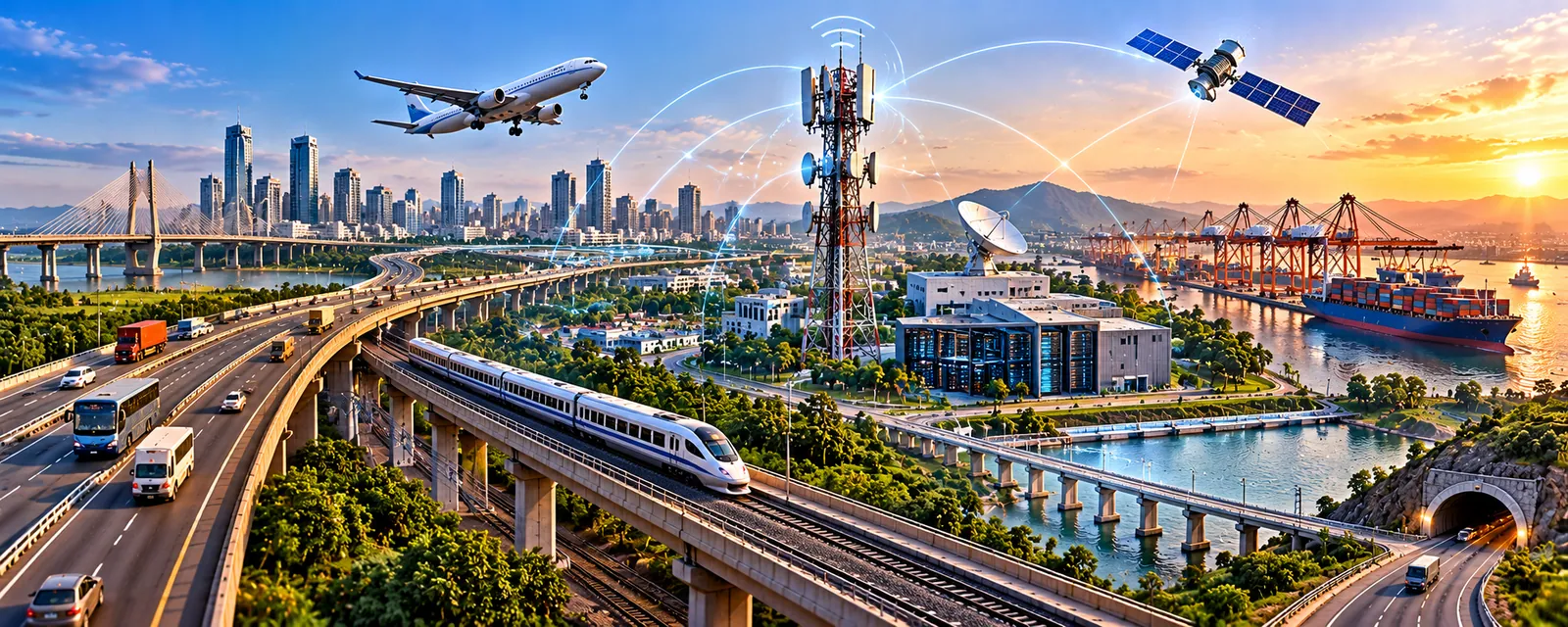
Notice how the branches build upwards: foundations, the five transport modes, logistics that joins them, the digital stack, then finance, equity and Andhra Pradesh.