Skip to content

Chapter 07Updated

Period After Kakatiya’s - Nayakas

  • 54sections
  • ~32min read
0%

0 of 54 sections

~32 min read

~32 min read
1Section 1 of 1About 1 min

Post-Kakatiya Political Transition

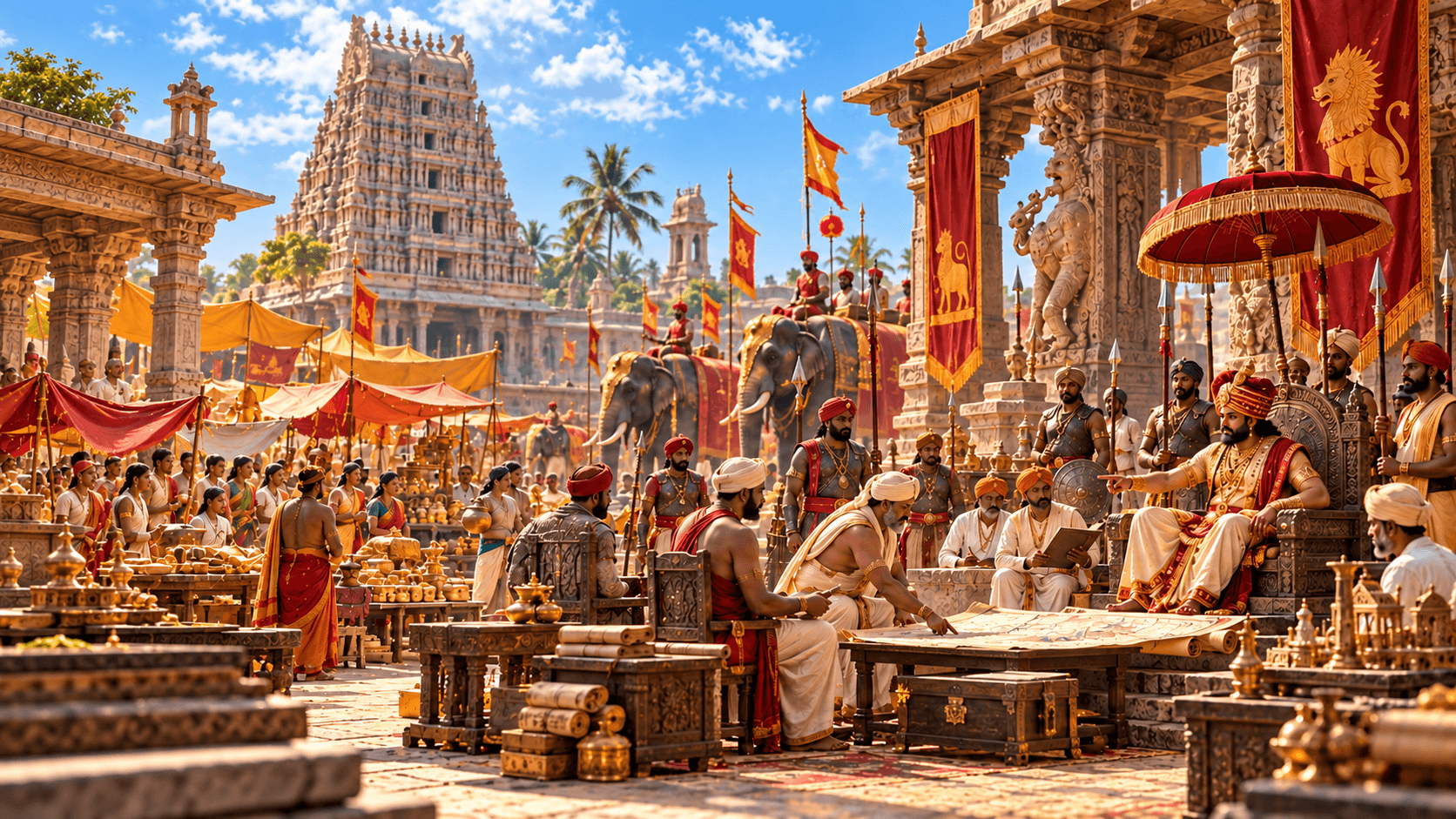
  • The fall of the Kakatiya kingdom in 1323 CE created a major political vacuum in Telangana and the wider Telugu region.

  • After the defeat of Prataparudra II, the Delhi Sultanate attempted to administer the former Kakatiya territories through appointed governors.

  • Resistance from former Kakatiya military chiefs and regional Nayakas led to the emergence of several independent or semi-independent powers.

  • The principal post-Kakatiya powers relevant to Telangana were:

    • Musunuri Nayakas of Warangal.
    • Recharla Padmanayakas/Velamas of Rachakonda and Devarakonda.
    • Reddy kingdoms of Kondaveedu and Rajahmundry.
    • Vijayanagara Kingdom.
    • Bahmani Sultanate.
  • The post-Kakatiya period was therefore characterised by political fragmentation, regional state formation and continuous warfare among the emerging powers.

  • Former Kakatiya subordinate chiefs became independent rulers and continued many military and administrative traditions of the Kakatiya age.

  • Warangal remained the principal strategic centre of Telangana, while Rachakonda and Devarakonda emerged as major centres of the Recharla Velamas.

Inside this chapter

What Period After Kakatiya’s - Nayakas covers

  1. Post-Kakatiya Political Transition
  2. Major Post-Kakatiya Powers
  3. Musunuri Nayakas
  4. Musunuri Prolaya Nayaka
  5. Musunuri Kapaya Nayaka
  6. Kapaya Nayaka and the Bahmani Sultanate
  7. Bhimavaram Battle
  8. Musunuri Nayakas: Rapid Recall
  9. Recharla Padmanayakas / Velamas
  10. Origins of the Recharla Velamas
  11. Recharla Genealogy
  12. Rachakonda Velama Kingdom
  13. Division into Rachakonda and Devarakonda
  14. Singama Nayaka II
  15. Other Literary Personalities of the Velama Courts
  16. Anapota Nayaka II
  17. Rao Madha Nayaka
  18. Singama Nayaka III
  19. Devarakonda Velama Branch
  20. Rachakonda vs Devarakonda
  21. Administration of the Velamas
  22. Administration: Rapid Recall
  23. Military Organisation and Warfare
  24. Economic Conditions
  25. Land Revenue
  26. Agriculture and Crops
  27. Textile Industry
  28. Trade
  29. Society
  30. Dress and Ornaments
  31. Dance and Performing Arts
  32. Religious Conditions
  33. Literature under the Velamas
  34. Bammera Potana
  35. Gourana
  36. Bhairava Kavi
  37. Koravi Goparaju
  38. Literary Personalities: Rapid Recall
  39. Temples under the Velamas
  40. Fort Architecture
  41. Rachakonda Fort
  42. Devarakonda Fort
  43. Bhuvanagiri and Warangal
  44. Ranamu Kudu
  45. Post-Kakatiya Political Landscape
  46. Major Political Powers: Founder Map
  47. Musunuri vs Rachakonda Velamas
  48. Rachakonda vs Devarakonda: Ruler Sequence
  49. Important Inscriptions
  50. Important Literary Works
  51. Important Forts and Associations
  52. Chronological Sequence
  53. Historical Significance
  54. Prelims Traps
All 18 chapters in Telangana History
  1. Era / Period before Satavahanas
  2. Satavahanas
  3. Ikshvakus
  4. Vishnukundina’s
  5. Vemulawada Chalukyas & Mudigonda Chalukyas
  6. Kakatiya Dynasty
  7. Period After Kakatiya’s - Nayakas
  8. Qutubshahi’s Dynasty
  9. Mughal Rule in Telangana
  10. Asaf Jahis (Nizam Kingdom)
  11. Important Organizations / Parties emerged during Nizam Period
  12. Samsthanas in Nizam Kingdom
  13. Socio-Cultural Revival / Renaissance in Telangana
  14. Telangana Adi-Hindu Movement, Andhra Mahasabha
  15. Literary, Library Movement and Newspapers, Literary Researchers and Important Poets
  16. Telangana Peasants and Tribal Rebellion
  17. Telangana Peasants Armed Struggle
  18. Operation Polo – End of Nizam Rule

Open the Telangana History library

In the official syllabus