Skip to content

Chapter 04Updated

Vishnukundina’s

  • 17sections
  • ~18min read
0%

0 of 17 sections

~18 min read

~18 min read
1Section 1 of 1About 1 min

Vishnukundinas: Overview

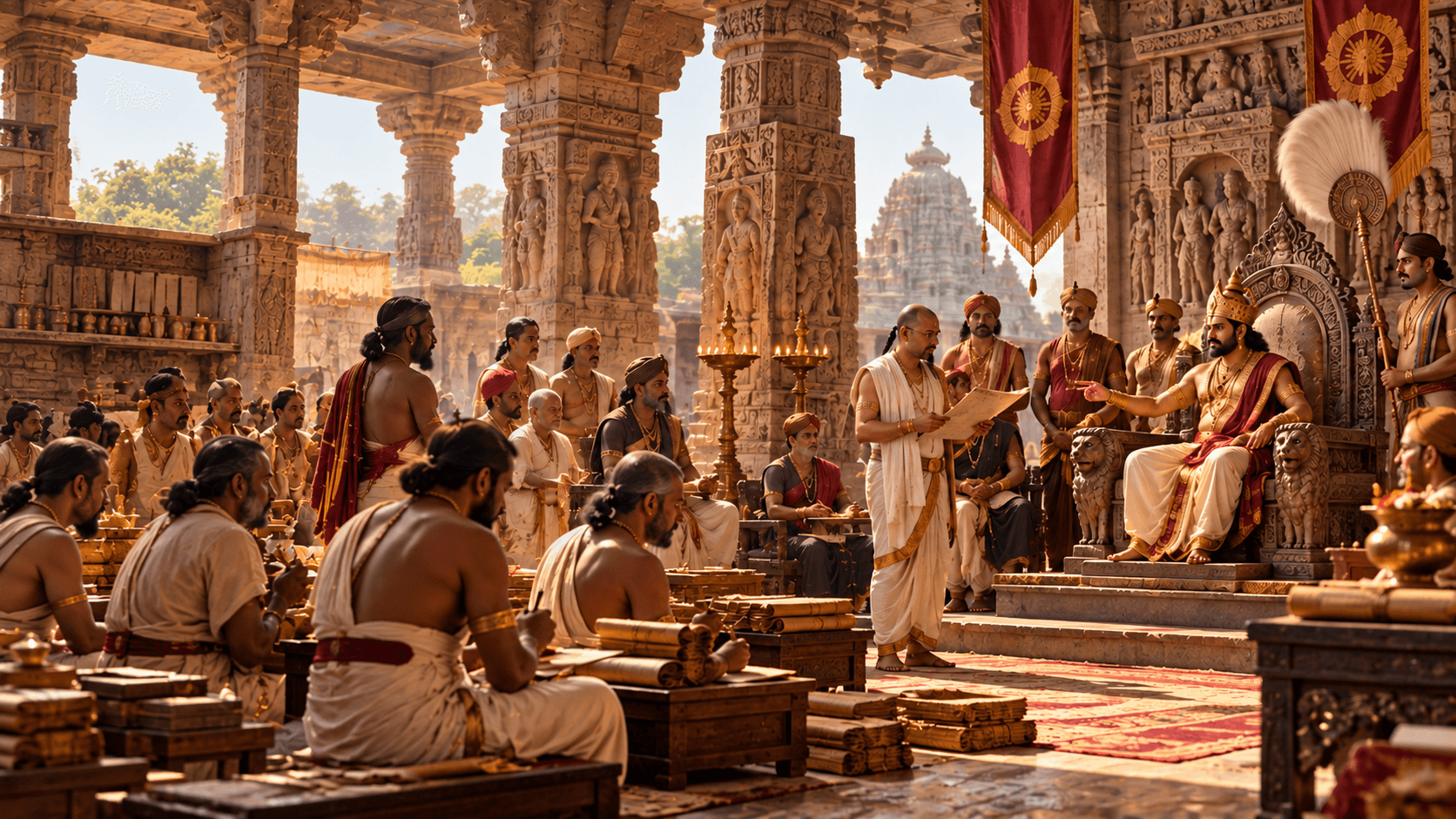
  • The Vishnukundinas ruled a major part of the Deccan and Telangana region during approximately 358–569 CE.
  • Indra Varma (Maha Rajendra Varma) is identified as the founder of the dynasty.
  • The dynasty's political centres included Indrapalanagaram, Keesara, Amarapuram and Denduloor.
  • Madhava Varma II is regarded as the greatest and most powerful Vishnukundina ruler.
  • The dynasty followed Vedic religion, while also extending patronage to Buddhism and Jainism during different phases.
  • Sanskrit was used as the official language.
  • The family presiding deity was Sri Parvata Swamy, associated with Srisailam Mallikarjuna.
  • The dynasty is particularly important for its cave architecture, inscriptions, Vedic rituals, educational centres and administrative institutions.
  • The Vishnukundinas described themselves as “Amarapureeshas” and as devotees or disciples of Sri Parvata Swamy.
  • Their coins are associated with symbols such as Nandi, while the dynasty's emblem is described as a lion with raised paw.
  • Mancha Bhattaraka Varma was the last ruler of the dynasty.

Inside this chapter

What Vishnukundina’s covers

  1. Vishnukundinas: Overview
  2. Origin and Early Capital
  3. Historical Sources
  4. Important Vishnukundina Rulers
  5. Administration
  6. Economy and Trade
  7. Social Conditions
  8. Judiciary
  9. Language and Literature
  10. Religious Conditions
  11. Art and Architecture
  12. Major Religious and Cultural Centres
  13. Vishnukundina Rulers: Rapid Recall
  14. Dynasty–Evidence Map
  15. Vishnukundinas and Major Religious Traditions
  16. Historical Significance
  17. Prelims Traps
All 18 chapters in Telangana History
  1. Era / Period before Satavahanas
  2. Satavahanas
  3. Ikshvakus
  4. Vishnukundina’s
  5. Vemulawada Chalukyas & Mudigonda Chalukyas
  6. Kakatiya Dynasty
  7. Period After Kakatiya’s - Nayakas
  8. Qutubshahi’s Dynasty
  9. Mughal Rule in Telangana
  10. Asaf Jahis (Nizam Kingdom)
  11. Important Organizations / Parties emerged during Nizam Period
  12. Samsthanas in Nizam Kingdom
  13. Socio-Cultural Revival / Renaissance in Telangana
  14. Telangana Adi-Hindu Movement, Andhra Mahasabha
  15. Literary, Library Movement and Newspapers, Literary Researchers and Important Poets
  16. Telangana Peasants and Tribal Rebellion
  17. Telangana Peasants Armed Struggle
  18. Operation Polo – End of Nizam Rule

Open the Telangana History library

In the official syllabus