-
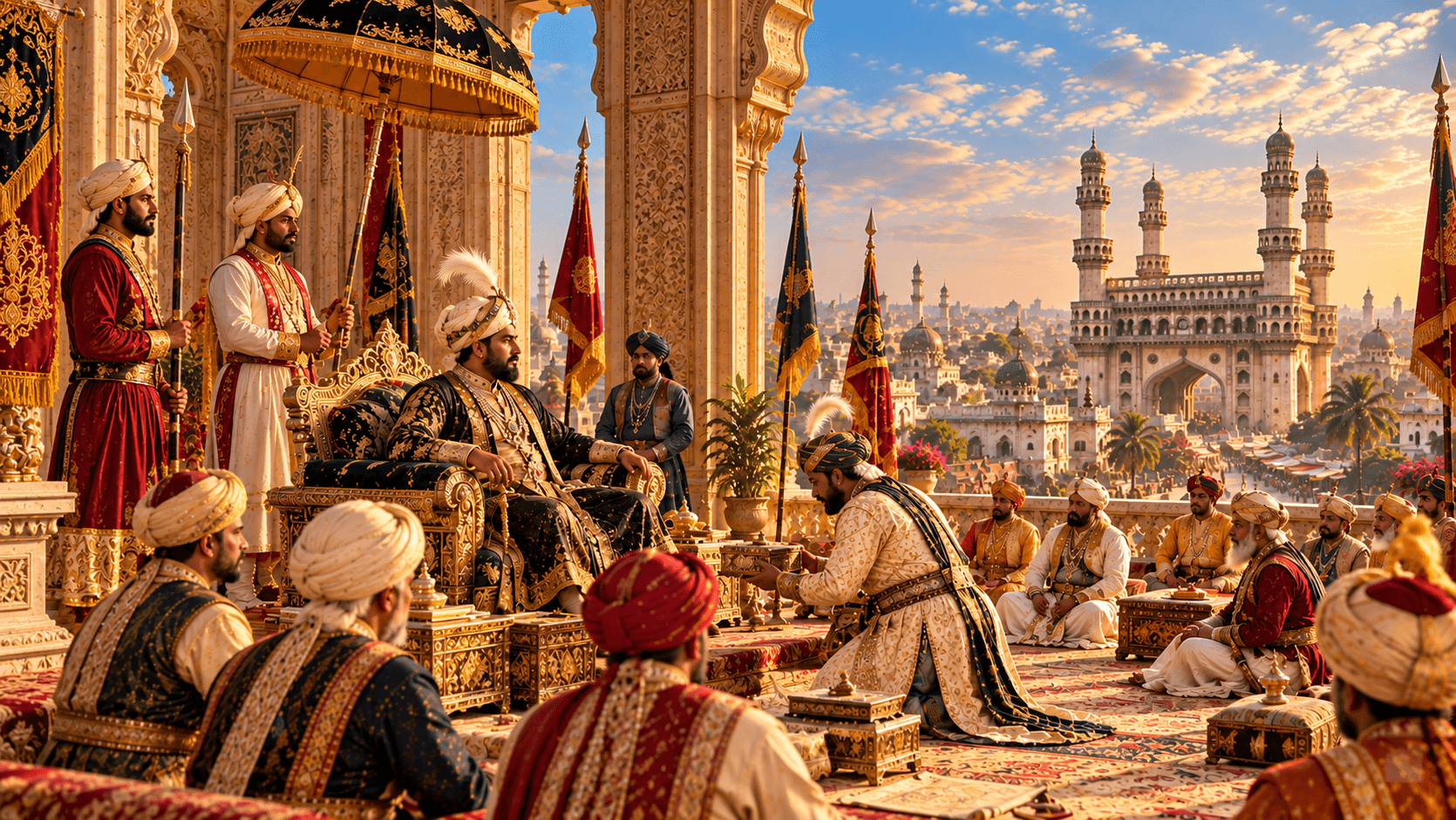
The Nizam's dominion contained 14 Samsthanas with independent status:
- Gadwal
- Wanaparthy
- Domakonda
- Jataprolu (Kolhapur)
- Munagala
- Papannapet
- Paloncha
- Sirnapalli
- Amarchinta
- Narayankhed
- Rajapet
- Annegond
- Dubbaka
- Gopalapet
-
The Samsthanas functioned as important semi-autonomous landed estates within the wider political structure of Hyderabad State.
-
Major Samsthanas associated with Telangana included Gadwal, Wanaparthy, Domakonda, Jataprolu, Munagala, Palvancha, Amarchinta, Papannapet and Sirnapalli.
-
Boravelli Samsthana was later absorbed into Gadwal Samsthana and is therefore treated separately in the historical account.
Samsthanas in Nizam Kingdom
- 12sections
- ~19min read
0%
0 of 12 sections
~19 min read
Inside this chapter
What Samsthanas in Nizam Kingdom covers
- Samsthanas in the Nizam Kingdom
- Structure of Telangana Feudal System
- Land Revenue System
- Land Ownership under the Ryotwari System
- Land Reforms and Tenant Protection
- Landlords and Local Revenue Hierarchy
- Gadi System in Telangana
- Telangana's Vetti System
- Baghela System
- Feudal Structure: Rapid Revision
- Key Numerical and Chronological Facts
- Prelims Traps
All 18 chapters in Telangana History
- Era / Period before Satavahanas
- Satavahanas
- Ikshvakus
- Vishnukundina’s
- Vemulawada Chalukyas & Mudigonda Chalukyas
- Kakatiya Dynasty
- Period After Kakatiya’s - Nayakas
- Qutubshahi’s Dynasty
- Mughal Rule in Telangana
- Asaf Jahis (Nizam Kingdom)
- Important Organizations / Parties emerged during Nizam Period
- Samsthanas in Nizam Kingdom
- Socio-Cultural Revival / Renaissance in Telangana
- Telangana Adi-Hindu Movement, Andhra Mahasabha
- Literary, Library Movement and Newspapers, Literary Researchers and Important Poets
- Telangana Peasants and Tribal Rebellion
- Telangana Peasants Armed Struggle
- Operation Polo – End of Nizam Rule
In the official syllabus
Where this leads