

Start hereAbout 2 min
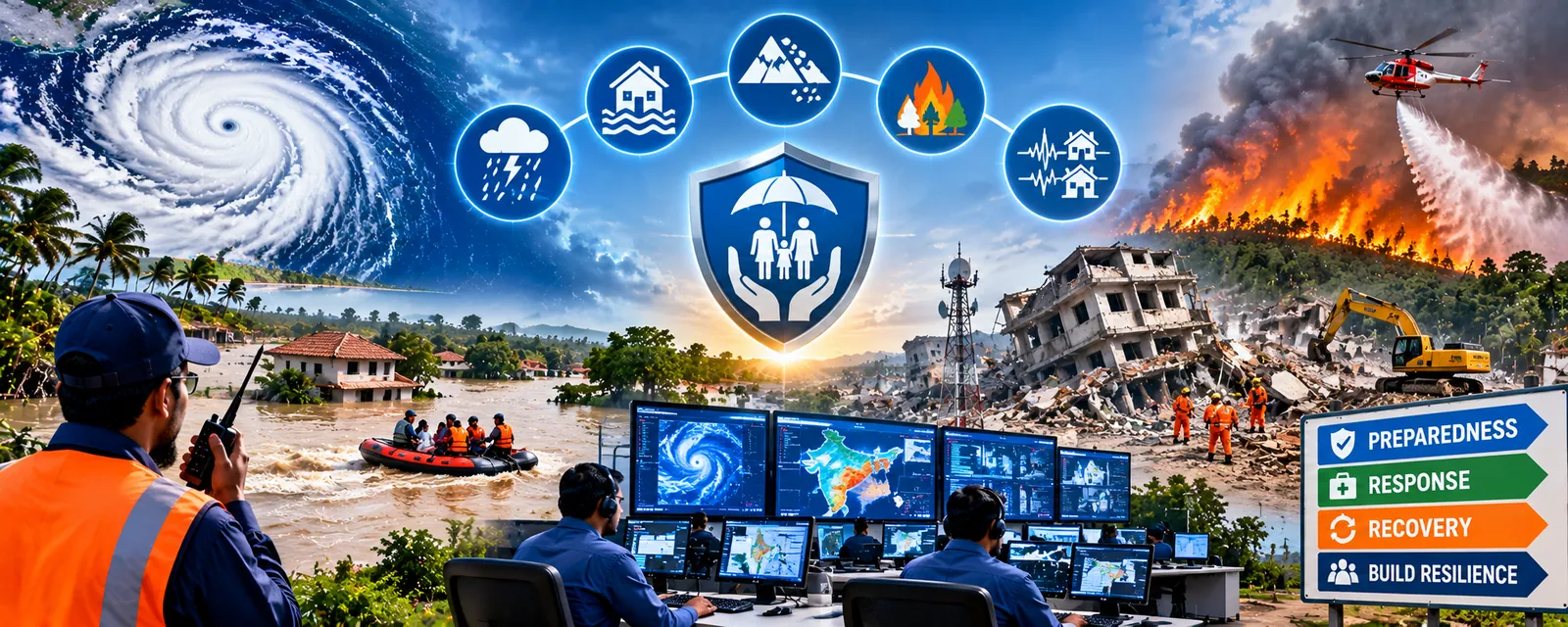
Chapter Overview Map
Natural Disasters, Forecasting and Disaster Management
10.1 Disaster science
- A hazard becomes a disaster only when it meets exposed and vulnerable people who cannot cope.
- Risk grows with hazard, exposure and vulnerability, and falls as capacity rises.
- The disaster management cycle runs from prevention to reconstruction.
10.2–10.4 Earth hazards
- Earthquakes release stress stored along faults; they cannot yet be predicted precisely.
- Tsunamis follow sudden displacement of the sea floor and grow taller in shallow water.
- Landslides occur when gravity overcomes the strength of a slope, often after heavy rain.
10.5–10.9 Weather and water hazards
- Tropical cyclones draw energy from warm seas; storm surge is often their deadliest part.
- Floods and droughts are opposite extremes of the water balance of a basin.
- Heatwaves and lightning are seasonal killers that warnings can sharply reduce.
10.10–10.13 Forecasting, warning and response
- Satellites, Doppler radars, ocean buoys and computer models turn observations into forecasts.
- An early warning system works only if the warning reaches people who know how to act.
- Mitigation and preparedness come before an event; response and recovery come after it.
10.14–10.15 Institutions and frameworks
- The Disaster Management Act, 2005 created authorities at national, State and district levels.
- The Sendai Framework (2015–2030) sets four priorities and seven global targets.
10.16–10.19 Andhra Pradesh
- Andhra Pradesh faces Bay of Bengal cyclones, delta floods and Rayalaseema drought.
- Case studies from Diviseema (1977) to recent cyclones show how warnings cut deaths.
Don't confuse
- Magnitude measures the energy an earthquake releases; intensity measures shaking felt at a place.
- Storm surge is driven by wind and low pressure; a tsunami by sudden displacement of water.
- Mitigation reduces the impact of a future hazard; preparedness readies people to respond.
Notice how the chapter moves from the science of each hazard to forecasting and warning, then to institutions, and finally applies all of it to Andhra Pradesh.