

Start hereAbout 1 min
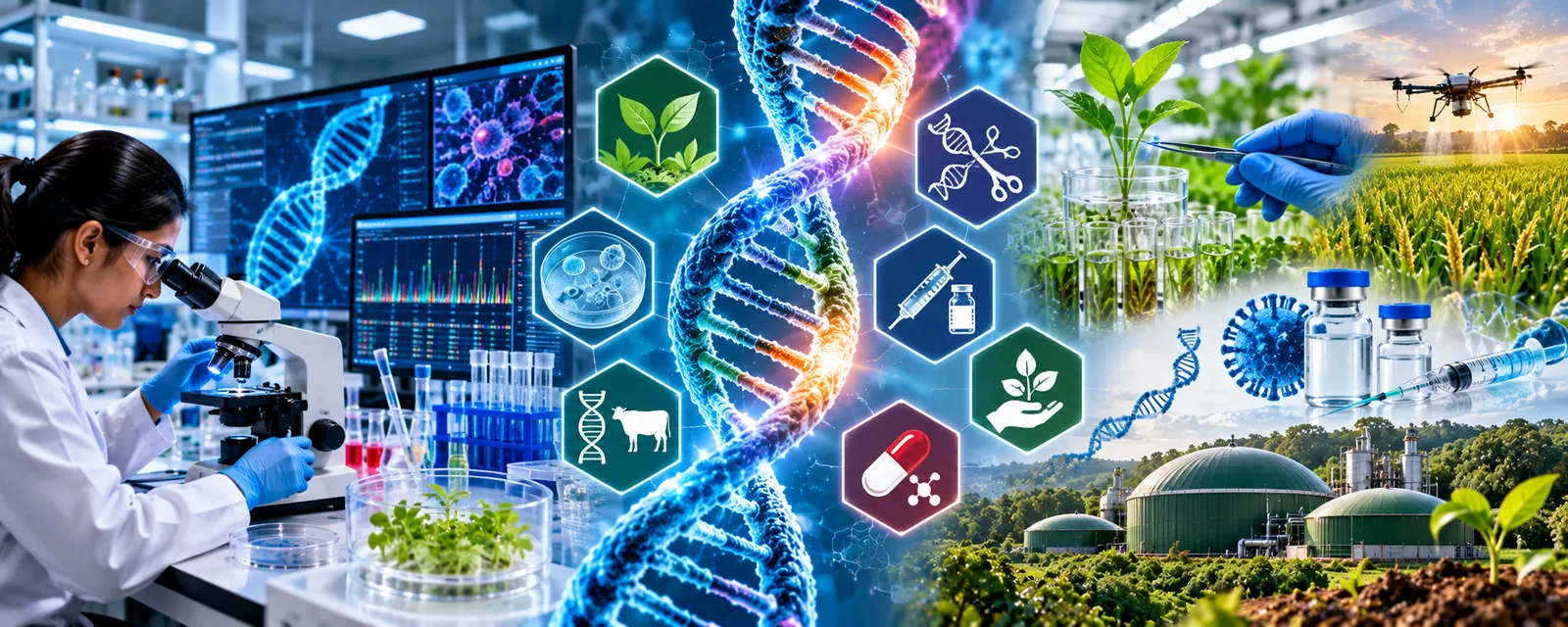
Chapter Overview Map
Biotechnology
13.1–13.2 Foundations
- Biotechnology uses living cells or their molecules to make products or solve problems.
- DNA carries genes; genes are copied into RNA, which directs the making of proteins.
- Traditional biotechnology used whole organisms; modern biotechnology changes genes directly.
13.3–13.6 Tools of genetic engineering
- Recombinant DNA technology joins a useful gene to a vector and puts it into a host cell.
- PCR copies a chosen DNA stretch; sequencing reads the order of its bases.
- Genomics studies whole genomes; CRISPR-Cas9 edits a chosen site in a genome.
13.7–13.9 Health biotechnology
- Recombinant proteins such as insulin and monoclonal antibodies are made in living cells.
- Gene therapy, cell therapy and stem cells aim to repair or replace faulty cells.
- New vaccine platforms and molecular diagnostics detect and prevent disease.
13.10–13.13 Industry, environment, farm and emerging
- Fermentation in bioreactors makes enzymes, chemicals, fuels and medicines.
- Bioremediation and biosensors use living systems to clean and monitor the environment.
- Synthetic biology and AI design new biological parts and predict protein shapes.
13.14–13.18 Regulation, India and Andhra Pradesh
- Genetically engineered organisms are regulated under the Rules, 1989 of the Environment (Protection) Act.
- DBT, BIRAC and the BioE3 Policy drive India's bioeconomy.
- Andhra Pradesh's strengths lie in aquaculture, agriculture and pharmaceutical manufacturing.
Don't confuse
- Genetic engineering adds or changes genes; genome editing changes a chosen site, often without foreign DNA.
- PCR makes copies of DNA; sequencing reads the DNA's base order.
- A biosimilar copies a biological medicine; a generic copies a chemical medicine.
Each branch names the sections it summarises; the last branch gathers the confusions that run through the whole chapter.