1Section 1 of 1About 1 min
Historical Context
-
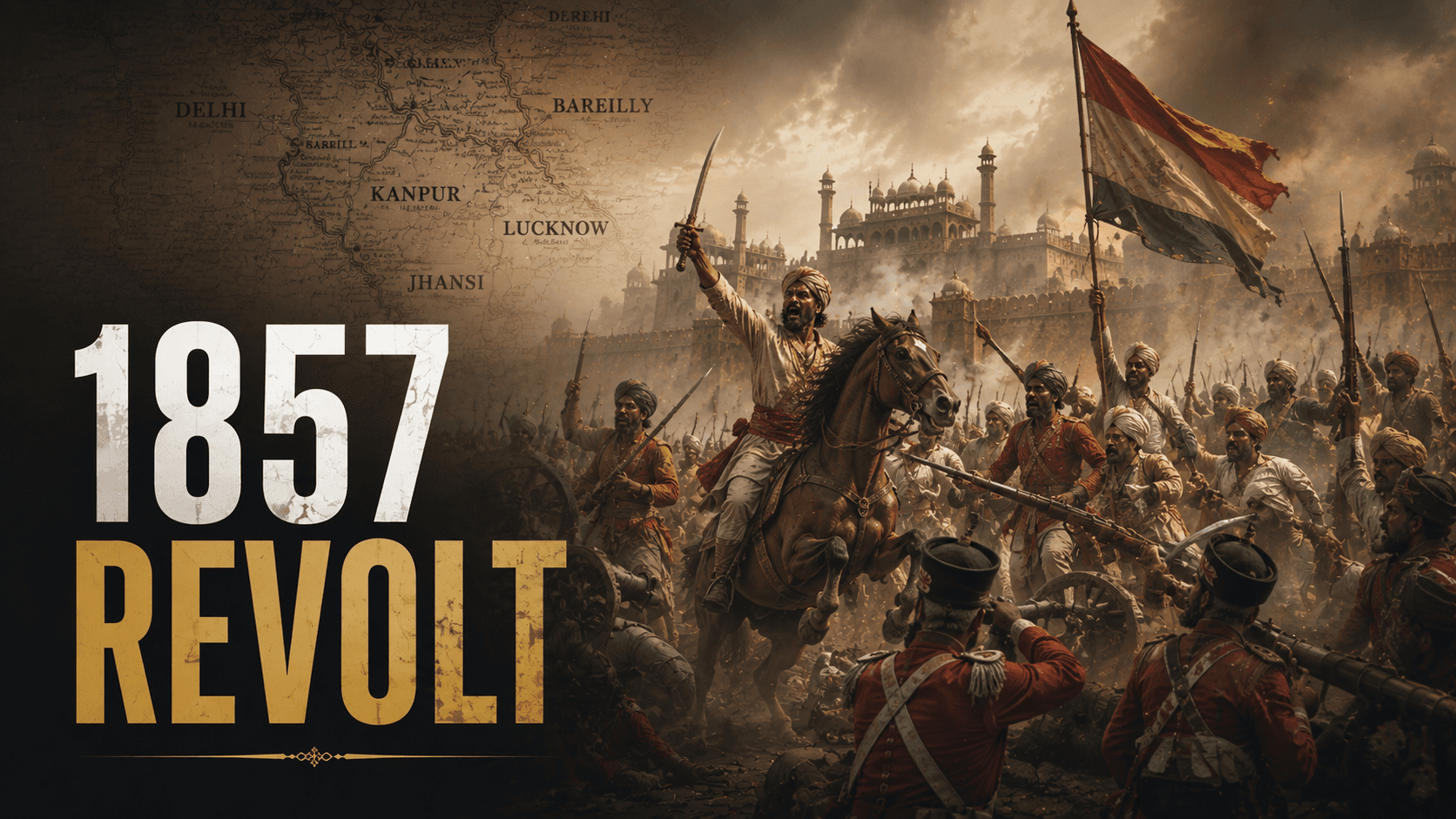
The Revolt of 1857 was the culmination of long-standing discontent generated by British expansion, economic exploitation, administrative changes, socio-religious anxieties and military grievances.
-
Between 1757 and 1857, resistance had repeatedly appeared through civil rebellions, peasant movements, tribal uprisings and sepoy mutinies.
-
By 1857, grievances had accumulated across several sections of society:
- Rulers and dispossessed aristocracy resented annexations and loss of political authority.
- Zamindars and taluqdars suffered loss of estates and status.
- Peasants faced heavy revenue demands, indebtedness and land alienation.
- Artisans suffered from the decline of traditional handicrafts.
- Sepoys faced discrimination, poor service conditions and religious anxieties.
- Sections of the traditional social elite feared interference with established customs and institutions.