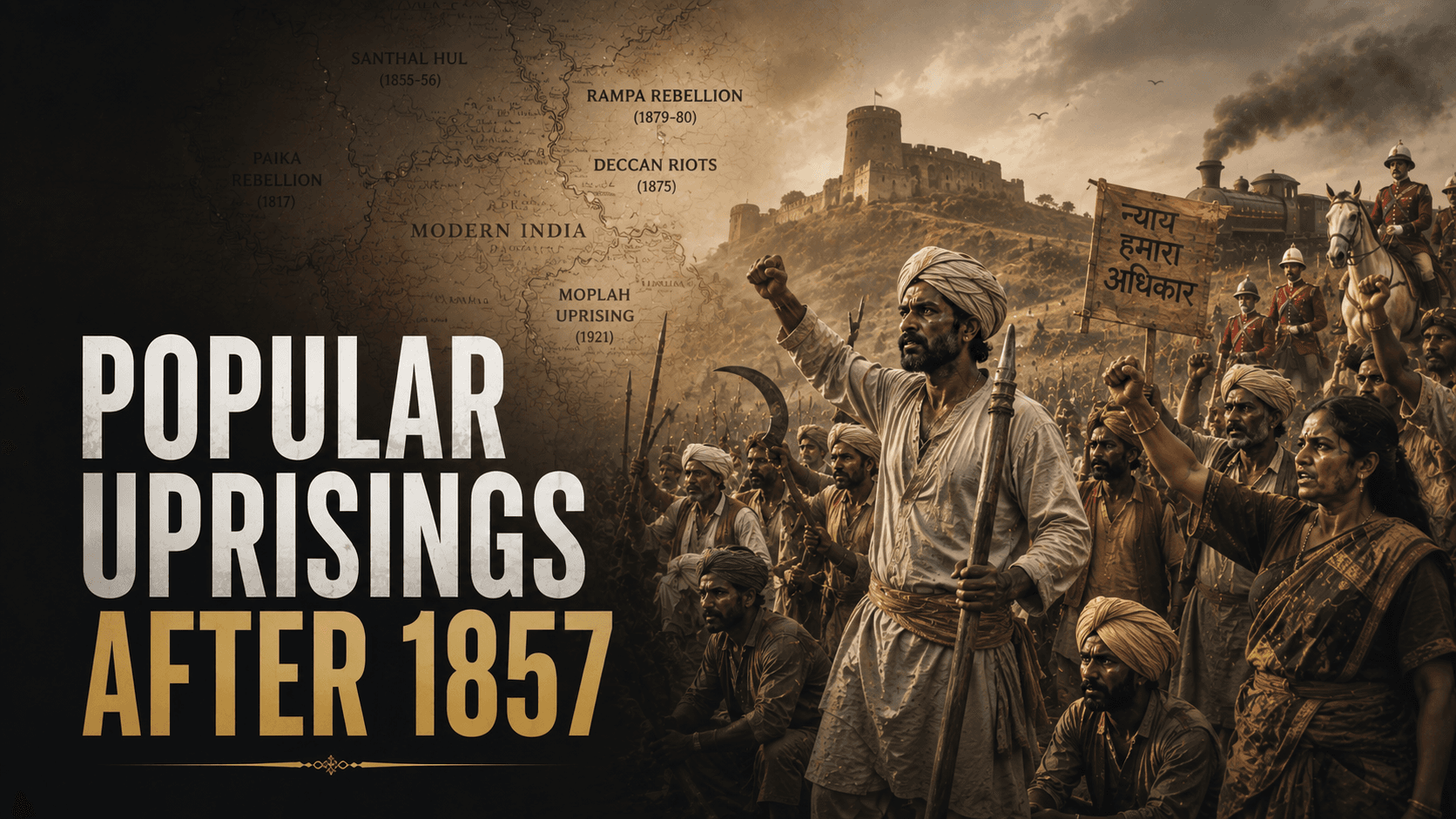
Popular Uprising After 1857 — Overview
-
Post-1857 popular uprisings increasingly centred on the economic and social grievances of peasants, tenants, tribals and industrial workers.
-
The peasant emerged as a direct participant rather than merely following traditional chiefs or local elites.
-
The immediate targets were usually indigo planters, zamindars, taluqdars and moneylenders, rather than colonialism as an abstract system.
-
The movements generally demanded:
- Reduction or non-payment of enhanced rents and revenue.
- Protection of tenancy and occupancy rights.
- Relief from indebtedness.
- Protection from illegal levies and forced labour.
- Restoration of land and customary rights.
- Better wages and working conditions in the case of industrial workers.
-
The character of these movements gradually changed in the 20th century as nationalism, Gandhian politics, socialism and communism increasingly influenced peasant and working-class mobilisation.
-
By the 1930s and 1940s, several movements moved beyond isolated local grievances towards organised class mobilisation and broader political objectives.