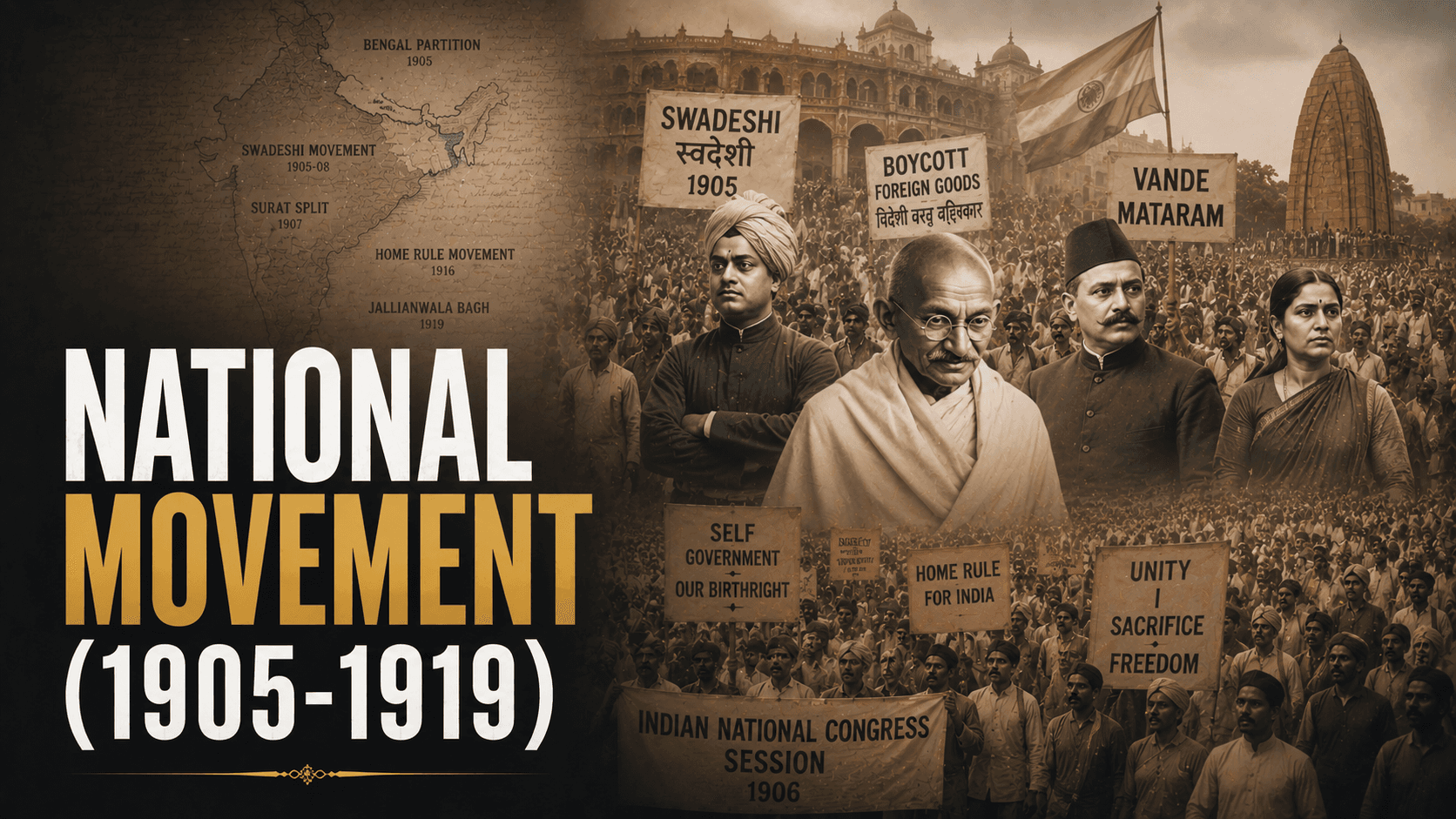
Background
-
Militant nationalism emerged as a stronger political current by the beginning of the 20th century, challenging the gradualist methods associated with the earlier nationalist leadership.
-
Its leading centres were:
- Maharashtra: Bal Gangadhar Tilak.
- Bengal: Aurobindo Ghosh and Bipin Chandra Pal.
- Punjab: Lala Lajpat Rai.
-
Lal-Bal-Pal became the prominent trio associated with assertive nationalism.
-
The new nationalist approach emphasised self-reliance, sacrifice, passive resistance, boycott and mass mobilisation rather than dependence on constitutional concessions.
Factors Behind the Rise
- Limited success of Moderate politics created dissatisfaction among the younger generation.
- The earlier nationalist critique had exposed the exploitative character of colonial rule, but political concessions remained inadequate.
- Famines of 1897–1901 and the government's unsatisfactory famine response intensified resentment.
- Plague-control measures in the Deccan and official high-handedness generated further opposition.
- Repressive measures included: