1Section 1 of 1About 1 min
Background: From War-Time Unity to Mass Nationalism
-
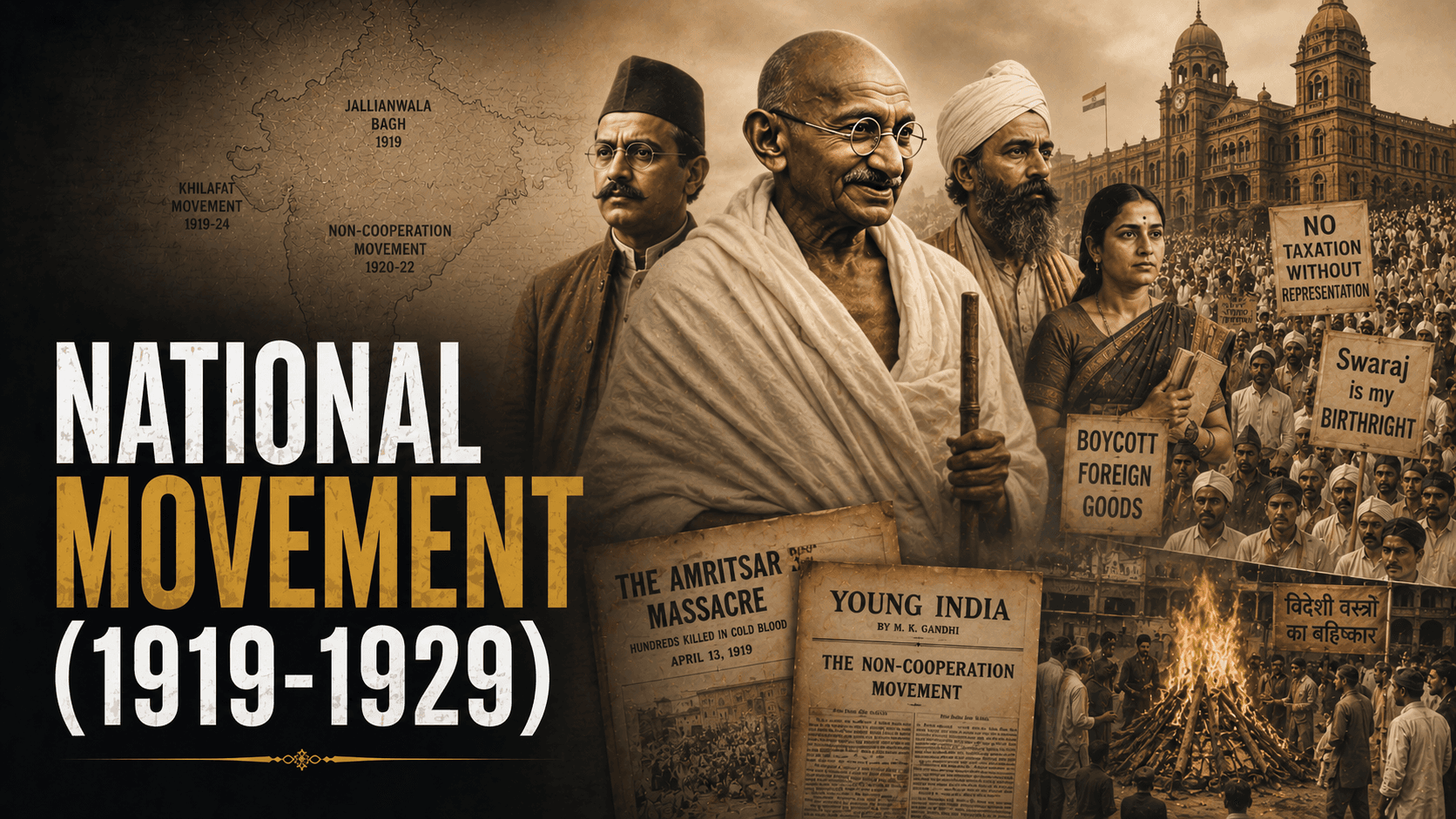
1919 marked a decisive transition in the Indian national movement: constitutional politics increasingly gave way to mass agitation, satyagraha and non-cooperation.
-
The post-First World War period created a combination of:
- economic hardship;
- political disappointment;
- repressive colonial measures;
- growing anti-imperialist sentiment;
- influence of the Russian Revolution;
- Hindu-Muslim political cooperation around the Khilafat issue.
-
Gandhi emerged as the central mass leader, transforming nationalism from predominantly elite political activity into a movement involving peasants, workers, students, traders, women and sections of the middle classes.