1Section 1 of 1About 1 min
Background to Economic Reforms
- Before Independence, India functioned largely under a colonial economic structure, with British industries using India mainly as a source of raw materials and as a market for manufactured goods.
- Adam Smith, regarded as the “Father of Economics”, explained the principle of Laissez Faire in The Wealth of Nations.
- Laissez Faire favours minimum government interference in economic activities and greater freedom for private enterprise.
- After Independence, India adopted a Mixed Economic Policy, combining public-sector control with private economic activity.
- In 1956, India moved towards a Socialist economy, with the government taking the leading role in establishing large industries during the Second Five-Year Plan.
- Industrial policies introduced between 1948 and 1990 progressively increased government control over the economy.
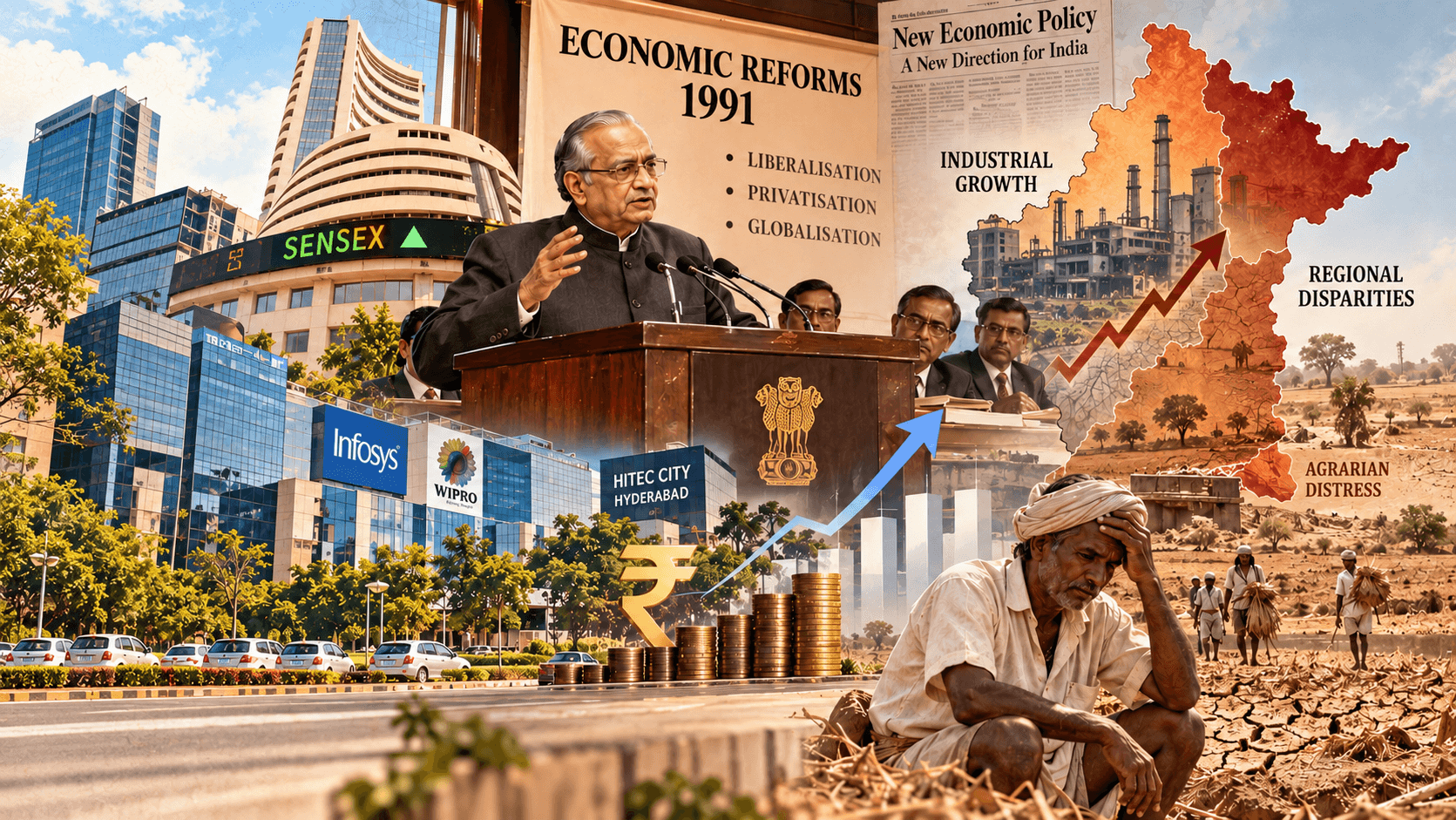
- The economic system remained heavily regulated until the 1991 New Economic Policy.