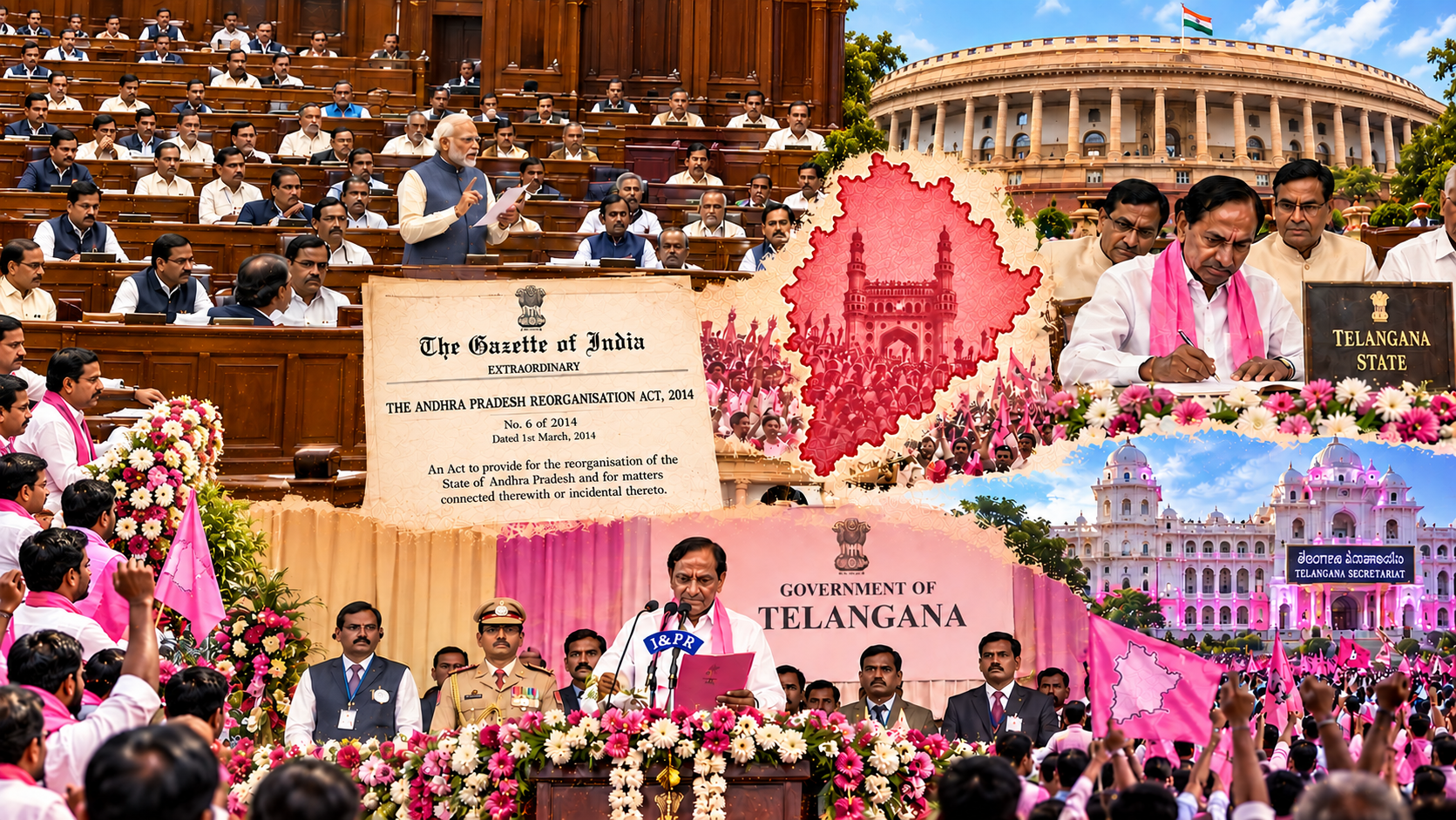
Constitutional Basis for State Formation
-
Article 3 of the Constitution empowers Parliament to create a new State by separating territory from an existing State or by uniting territories of States.
-
Article 3 also covers:
- Increase or reduction of the area of a State.
- Alteration of State boundaries.
- Change of the name of a State.
-
The Union Parliament has the decisive legislative power; the concerned State Legislature only expresses its views.
-
A Bill under Article 3 requires the recommendation of the President before introduction in either House of Parliament.
-
When the Bill affects the area, boundaries or name of a State, the President refers it to the concerned State Legislature for expressing its views within the specified period.
-
The State Legislature's opinion is not binding on Parliament.
-
The Andhra Pradesh Legislature opposed the Telangana Bill, but Parliament proceeded with the legislation.
-
A law made under Articles 2 and 3 is not treated as a constitutional amendment for Article 368 purposes.
-
The Andhra Pradesh Reorganisation legislation was therefore enacted through the Article 3 route rather than the special-majority procedure under Article 368.