

Start hereAbout 1 min
Chapter Overview Map
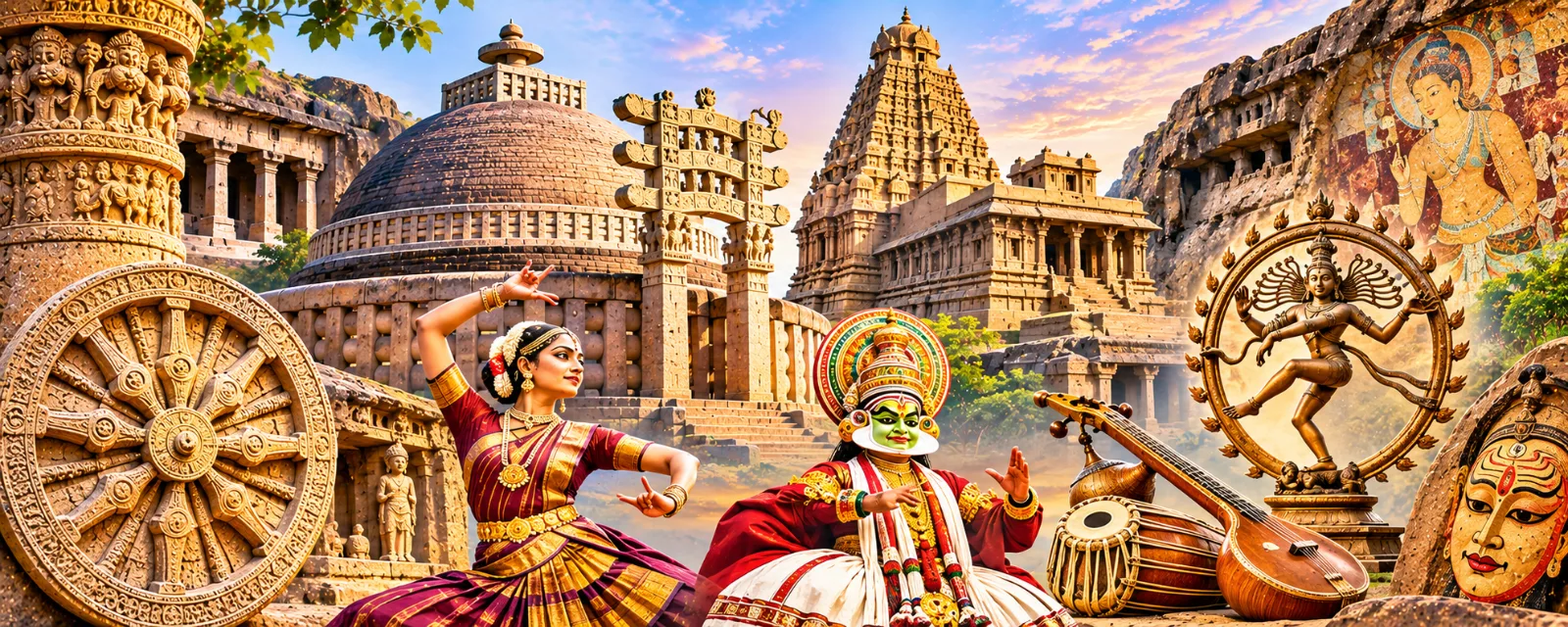
Ancient Indian Art, Performing Arts and Cultural Heritage
13.1–13.4 Beginnings to the Mauryas
- Rock art at Bhimbetka, Harappan seals, bronzes and planned cities, and Mauryan polished pillars and caves.
- Materials change from pigment and clay to bronze, brick and dressed stone.
13.5–13.9 Architecture
- Stupas, chaitya halls and viharas serve Buddhist worship and monastic life.
- Jain rock-cut caves and Gupta stone temples lead to the later Nagara and Dravida styles.
13.10–13.14 Sculpture, icons and painting
- Four schools: Gandhara, Mathura, Amaravati and Gupta Sarnath.
- Mudras, attributes and symbols identify images; Ajanta and Bagh preserve murals.
13.15–13.19 Performing and literary arts
- Samaveda chant, Natyashastra theory of rasa and abhinaya, Sangam pann, yazh and kuravai.
- Epics, Jatakas and plays supply the stories carved and painted on monuments.
13.20–13.26 Heritage today
- Regional site atlas, World Heritage properties and the Andhra Pradesh and Telangana Buddhist heritage.
- Patronage, trade, conservation law and museums explain how monuments were made and kept.
Don't confuse
- Udayagiri near Vidisha (Gupta, Hindu) is different from Udayagiri-Khandagiri in Odisha (Jain, Kharavela).
- Mahabalipuram, Pattadakal, Brihadisvara and Ramappa are later than the ancient core; they mark the medieval transition or the medieval period itself.
Notice how the branches move from the oldest evidence to the heritage institutions of today, and how the confusion branch gathers the chronology traps that recur across the chapter.