

Start hereAbout 2 min
Chapter Overview Map
Later medieval Deccan, c. 973–1318 CE
4.1–4.3 Setting, sources and transition
- River basins of the Krishna, Tungabhadra and Godavari fed the agrarian wealth that rival kingdoms fought over.
- Inscriptions are the main evidence, but royal praise (prashasti) must be checked against rival records.
- Tailapa II replaced the Rashtrakutas in 973, so Chalukya rule continued Rashtrakuta institutions.
4.4–4.12 Western Chalukyas of Kalyani
- Capital moved from Manyakheta to Kalyani under Someshvara I (1042–1068).
- Wars with the Cholas centred on Vengi and the Tungabhadra frontier, with Koppam (1054) a key battle.
- Vikramaditya VI (1076–1126) began the Chalukya-Vikrama Era and patronised Bilhana and Vijnaneshwara.
- Soapstone temples at Lakkundi, Itagi and Gadag led towards the Hoysala style.
4.9 Kalachuri interlude
- Bijjala II took imperial titles in 1157 and seized Kalyani in 1162.
- Basavanna and the Vachana poets belong to this court setting.
4.13–4.23 Hoysalas of Dwarasamudra
- Vishnuvardhana won at Talakad (1116) and built the Chennakeshava temple, Belur (1117).
- Ballala II made the kingdom independent c. 1192–93 after defeating the Yadavas.
- Belur, Halebidu and Somanathapura became a World Heritage property of the United Nations Educational, Scientific and Cultural Organization (UNESCO) in 2023.
4.24–4.29 Seuna Yadavas of Devagiri
- Bhillama V founded Devagiri c. 1187; Singhana II took the kingdom to its height.
- Alauddin Khalji's raid (1296) began, but did not complete, the end of Yadava independence.
- Jnaneshwar, Hemadri and Bhaskara II belong to the wider Yadava-age culture.
Don't confuse
- Badami Chalukyas (6th–8th century) are a different line from the Kalyani Chalukyas (973–c. 1189).
- Someshvara III wrote the Manasollasa; Somanatha was the general who built Somanathapura.
- Devagiri is the Yadava name; Daulatabad is the later Tughluq name.
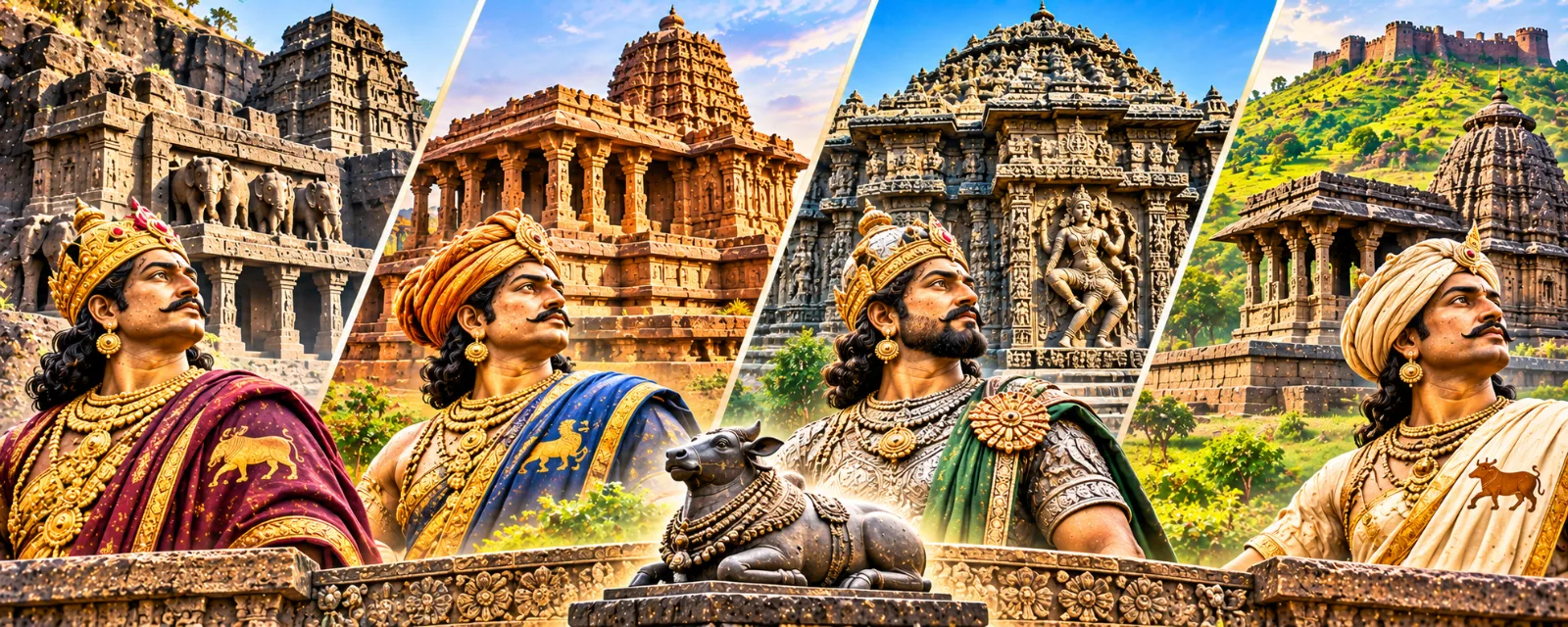
The branches follow the chapter: the setting first, then the Western Chalukyas, the Kalachuris, the Hoysalas and the Yadavas. Notice how each later kingdom began as a subordinate of the one before.